Awaji Art Circus 2025 Autumn Program
Awaji Art Circus 2025 Highlights Video
Theatre Show
Whispers of a Vanished Battlefield
~Memories of the Heike~
October 18 (Sat)–20 (Mon)
October 24 (Fri)–26 (Sun)
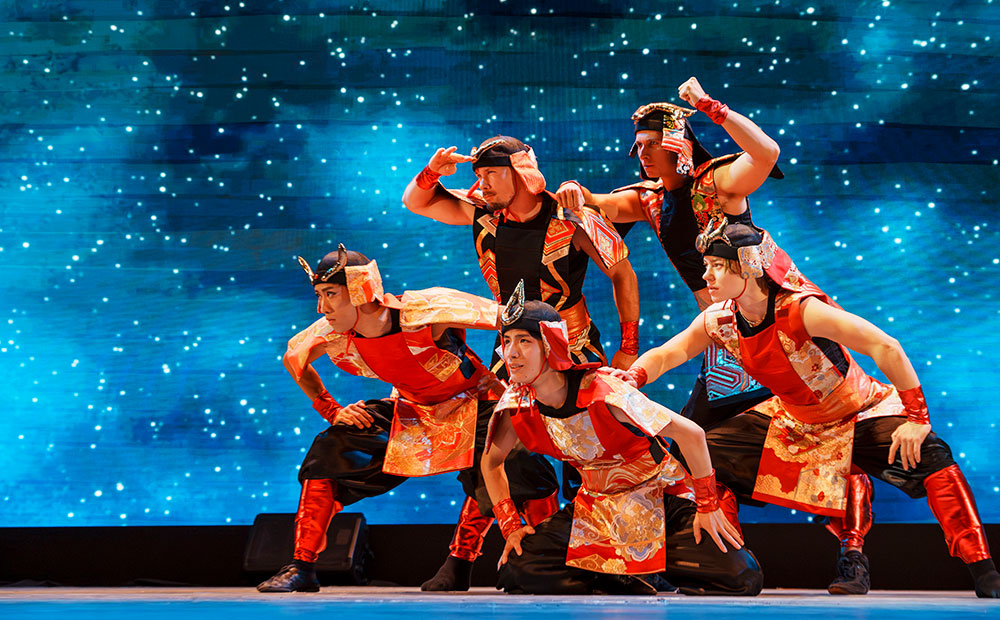
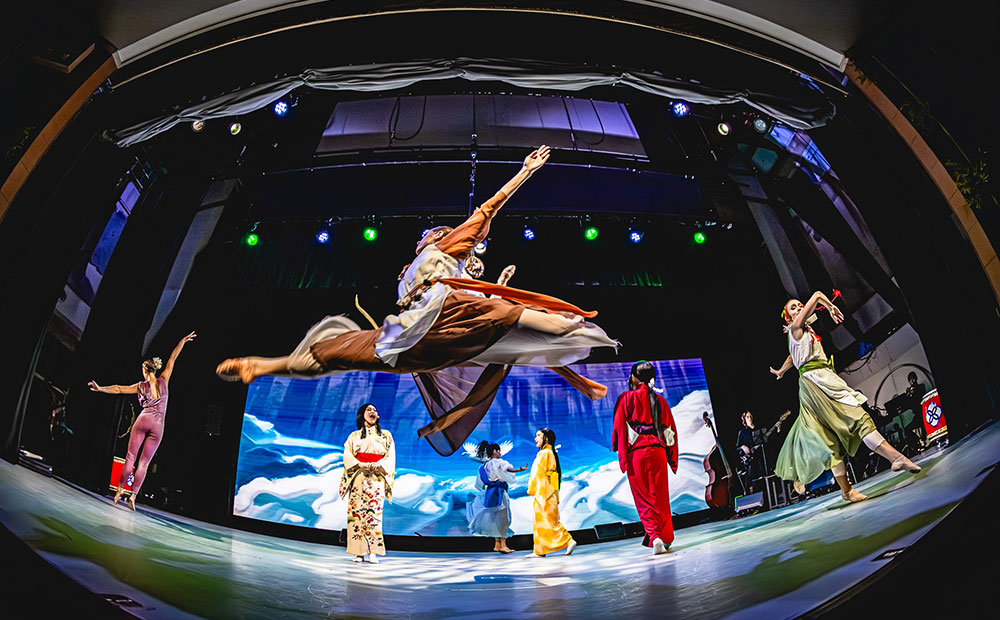
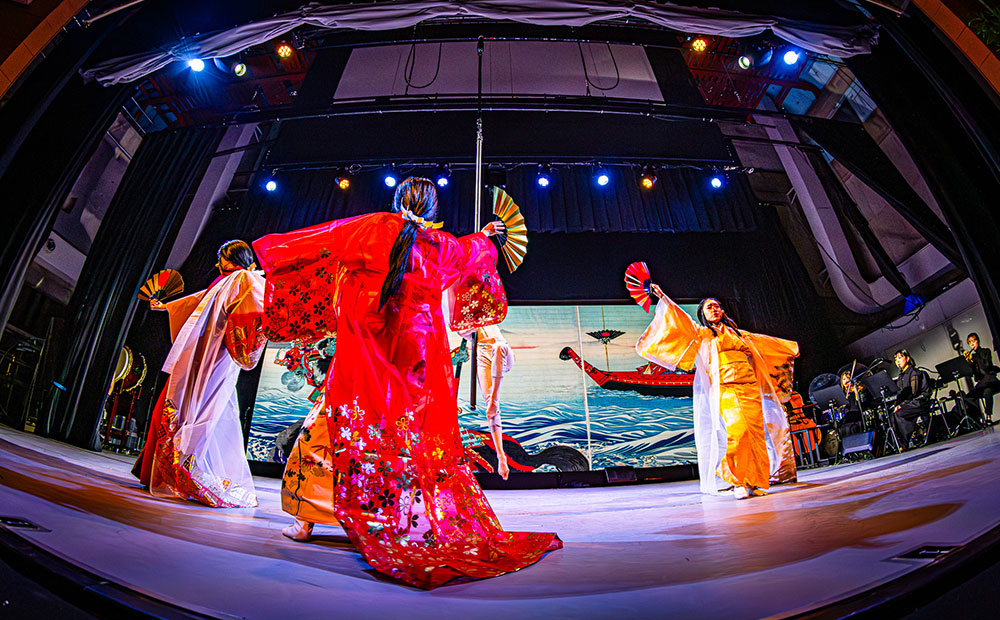
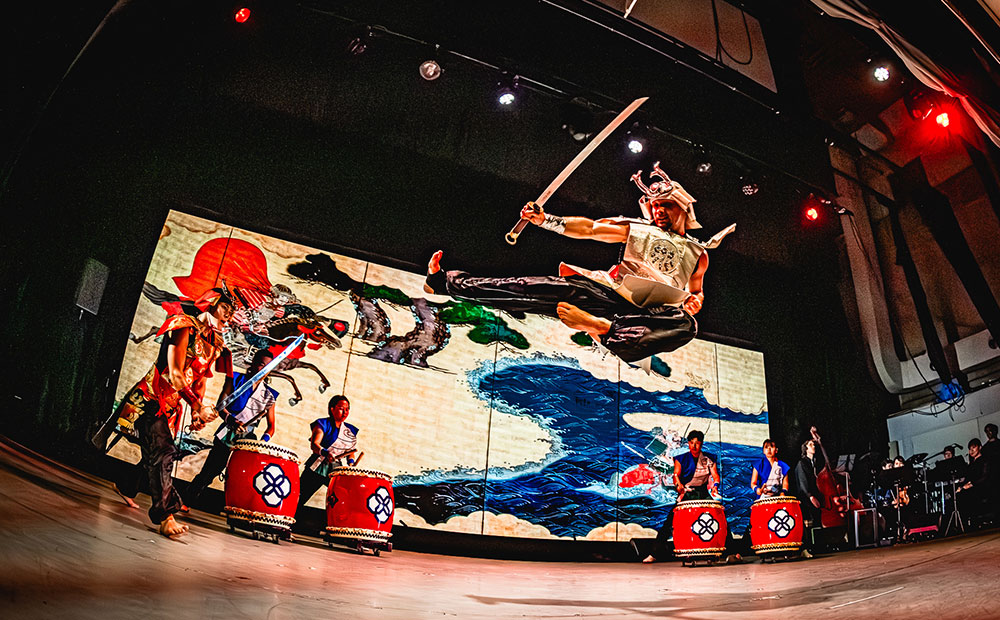
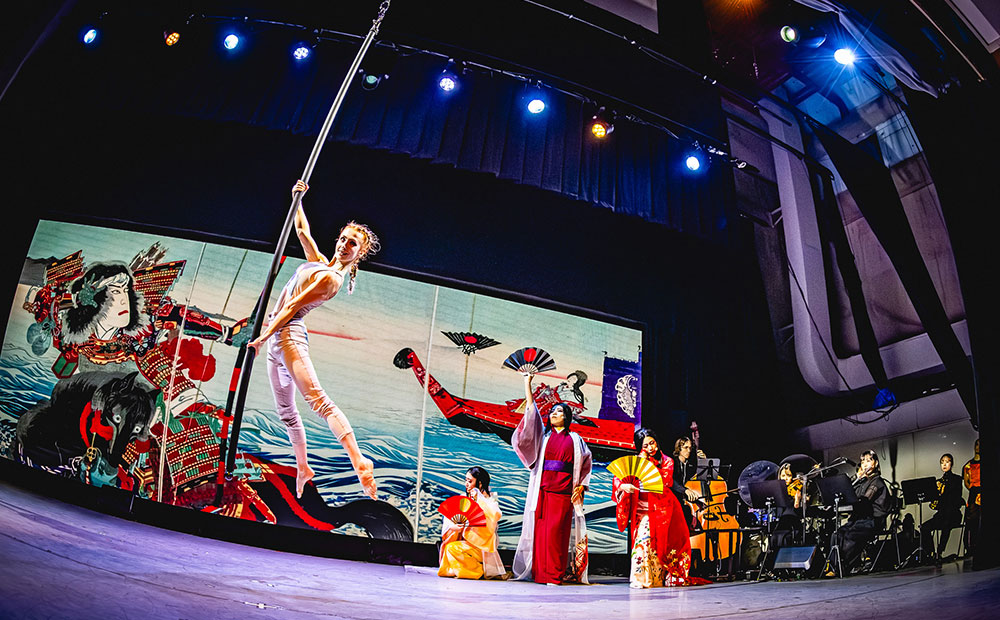
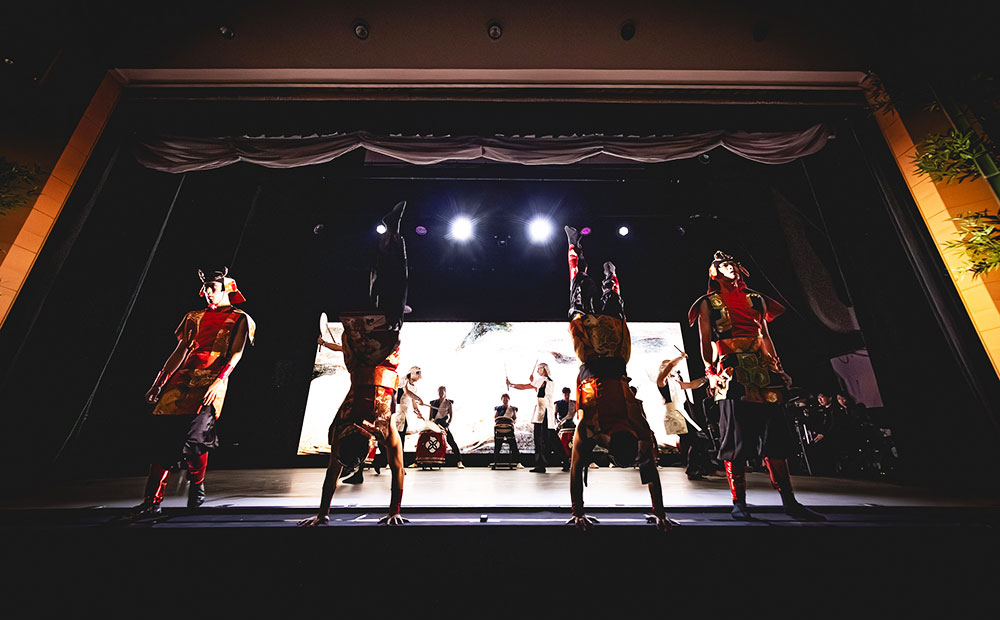
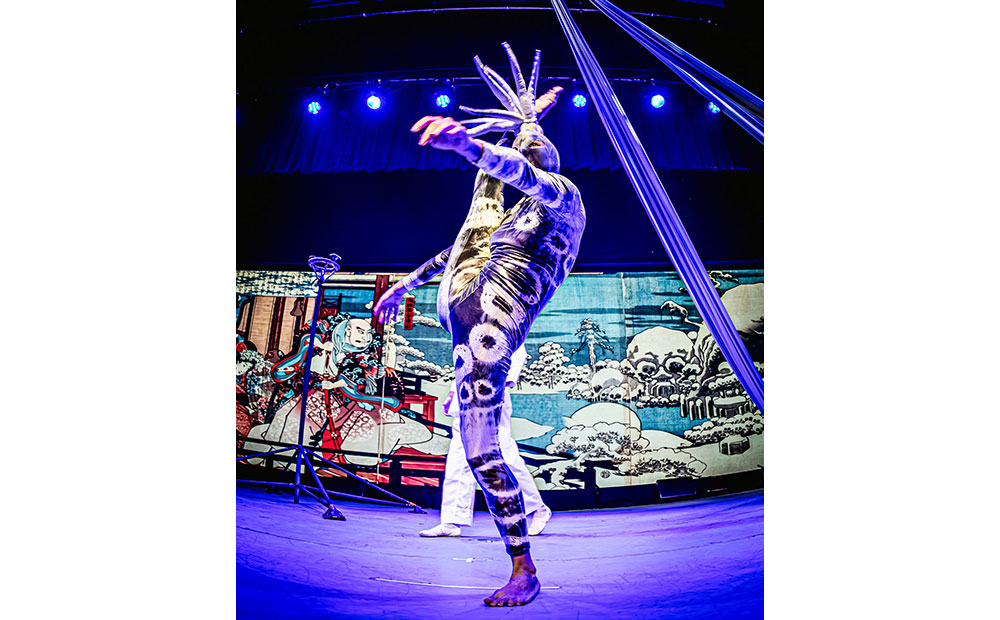
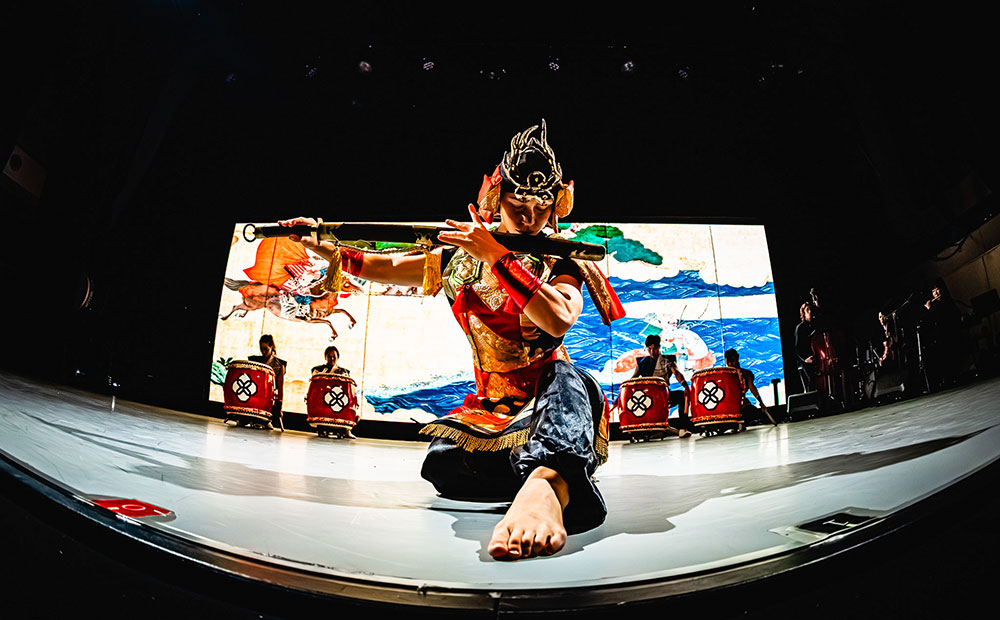
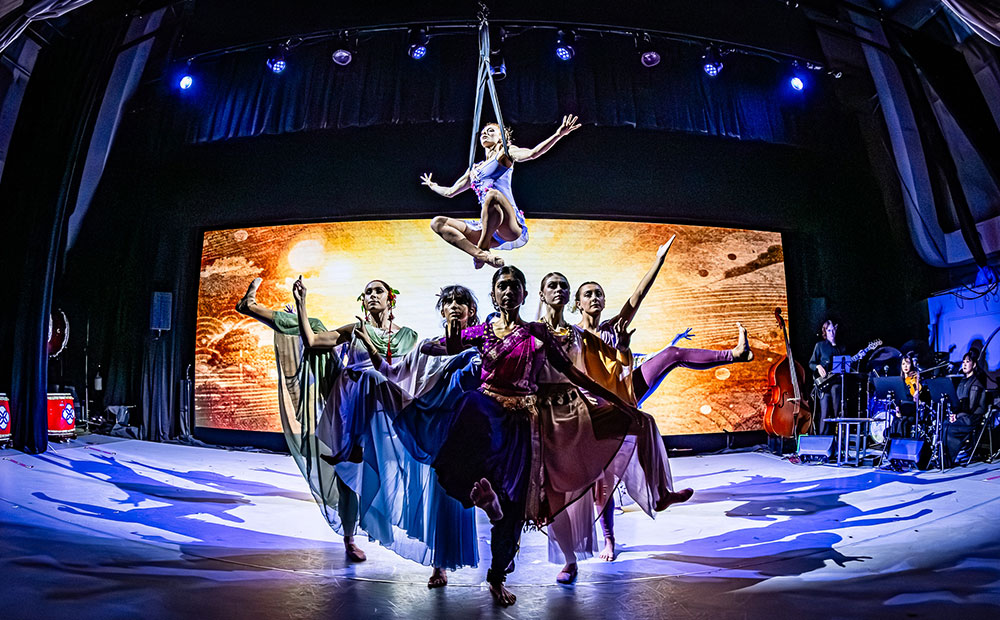
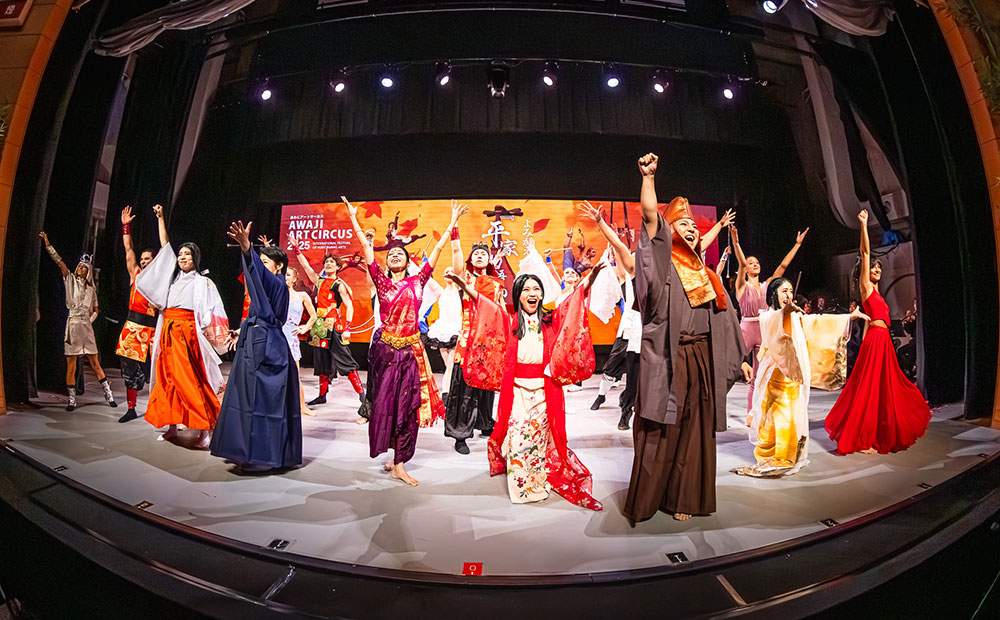
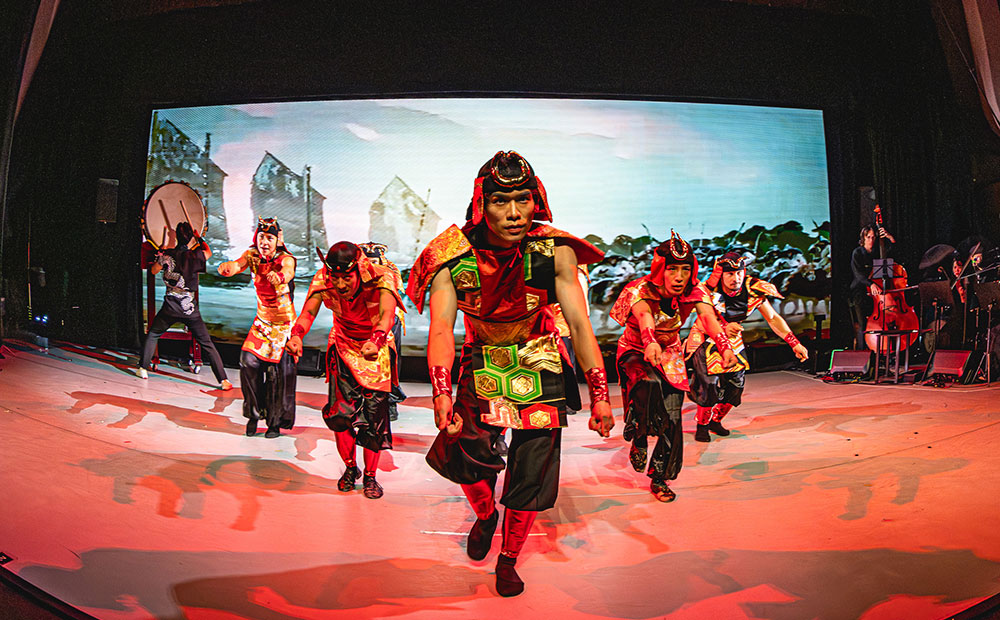
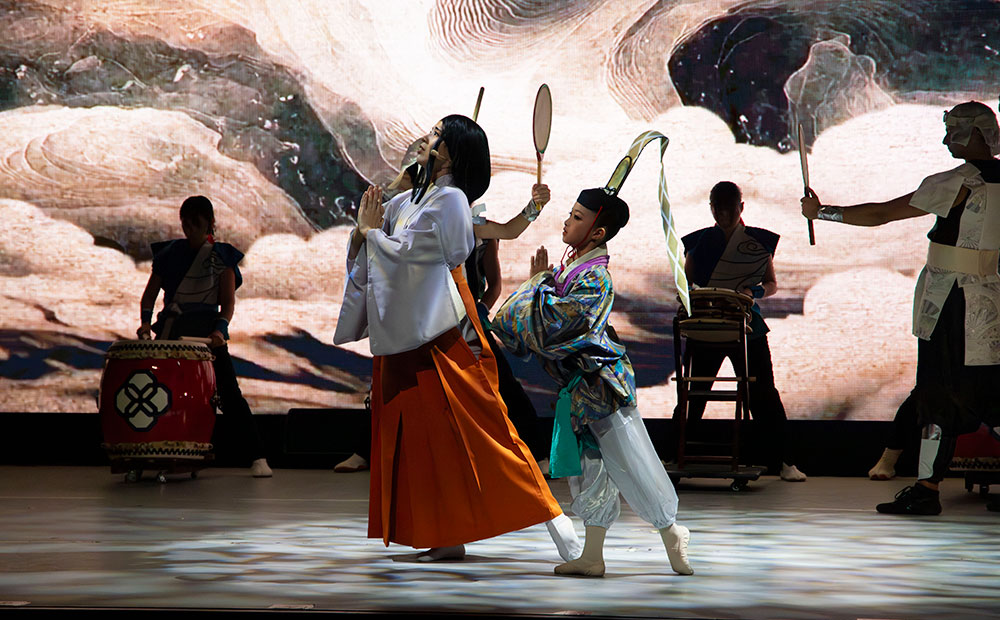
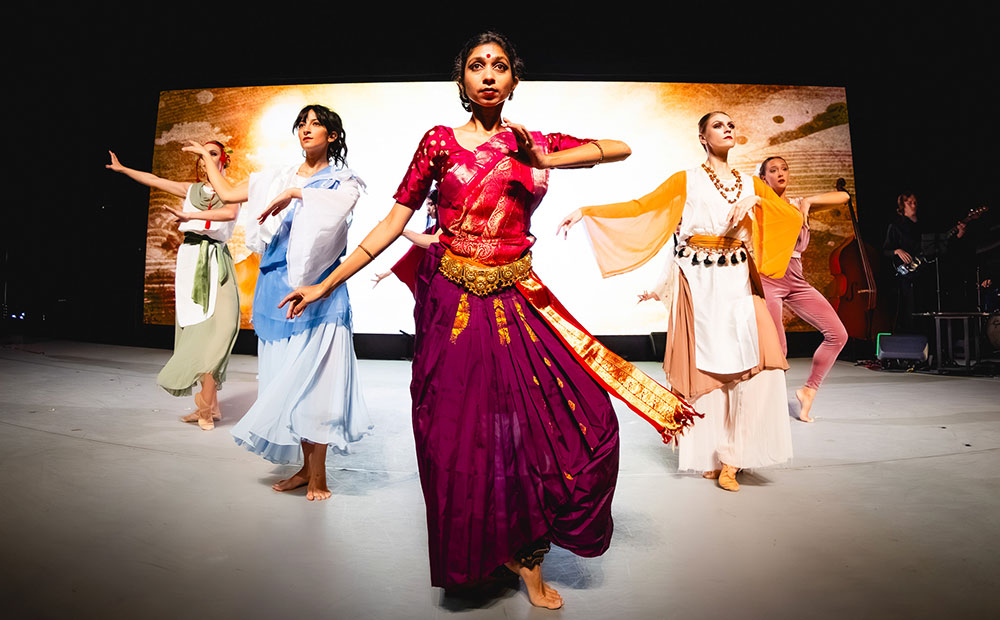
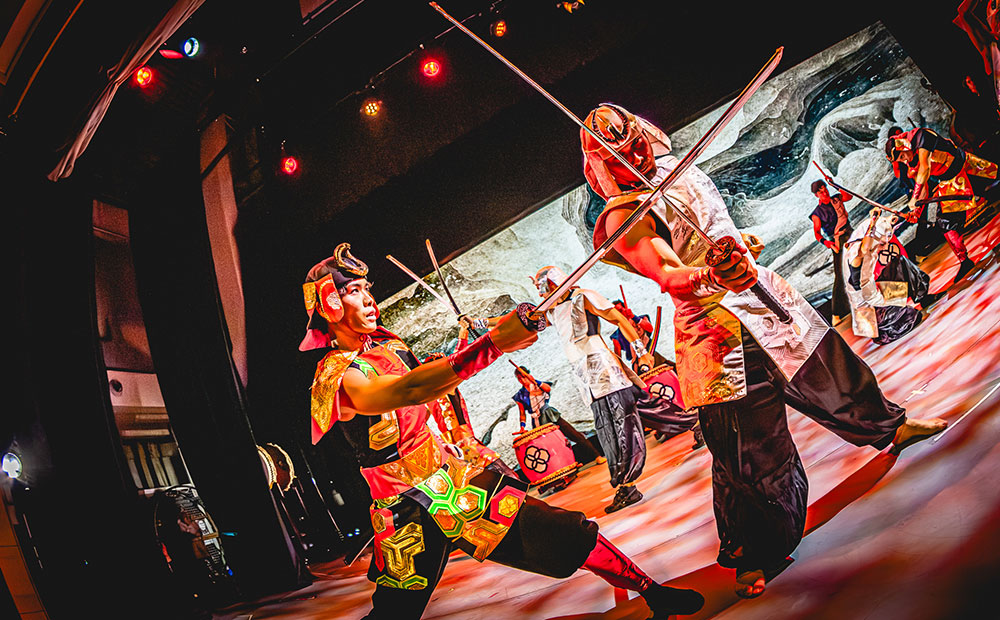
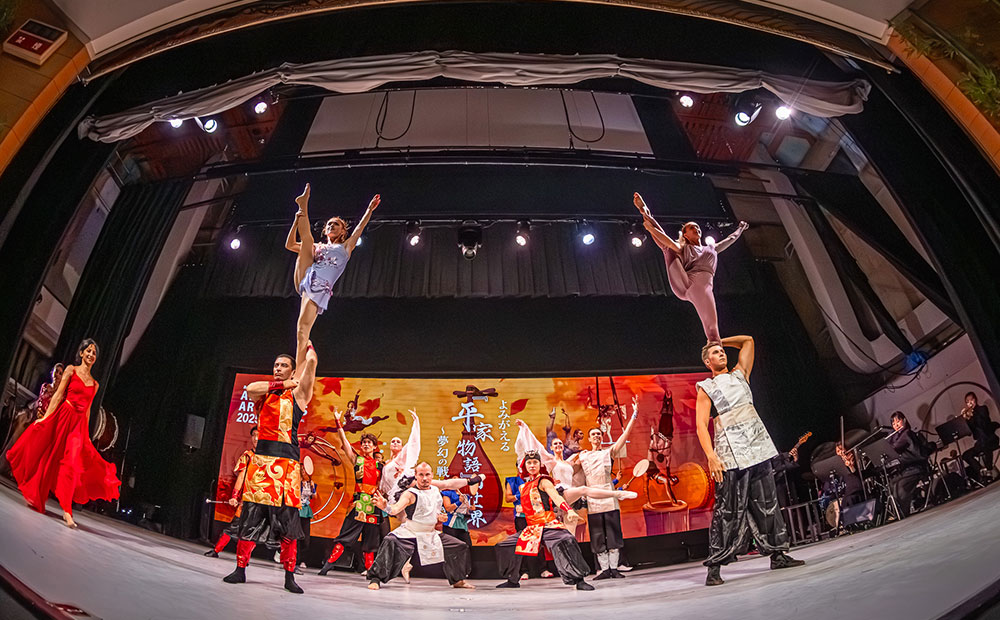
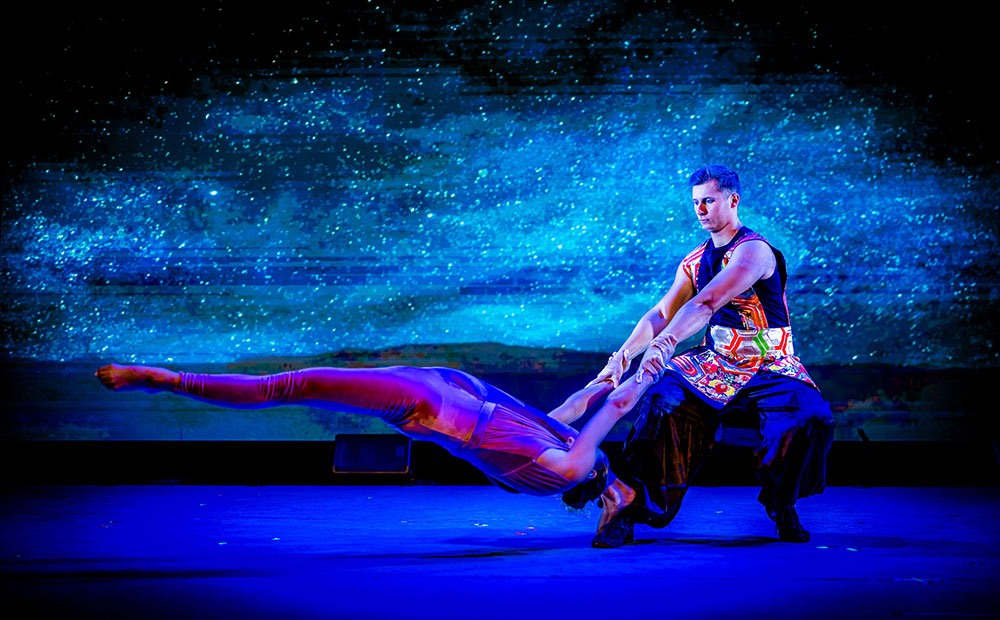
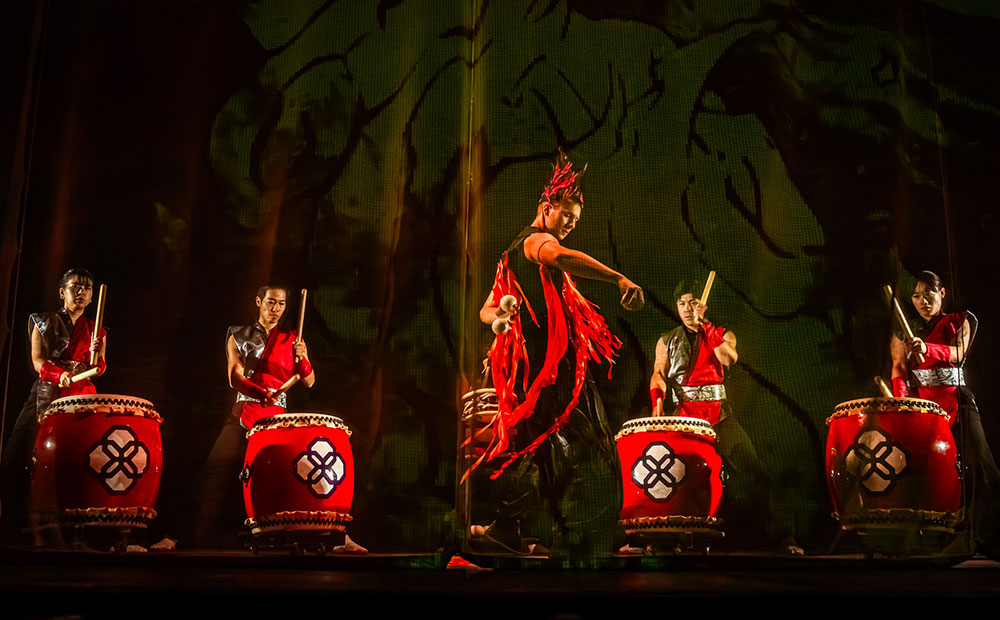
This production portrays a fantastical world inspired by The Tale of the Heike through a rich variety of performances, including circus, dance, music, and visual imagery. The dreams and memories of those who lived through an age of warfare are carried into the present like the wind, resonating through physical expression and theatrical staging.
The story begins with the splendor and refined court culture of the Taira clan at the height of their glory, then unfolds through the victory and tragic retribution of the Burning of Nanto, Taira no Kiyomori’s nightmares and final moments, and the heroic Battle of Ichi-no-Tani, highlighted by the dramatic descent at Hiyodorigoe. It further depicts the encounter between Taira no Atsumori and Kumagai Naozane, expressing the transience of war and individual fate symbolized by the fan target, before leading to the ultimate downfall of the Taira clan at the Battle of Dan-no-ura.
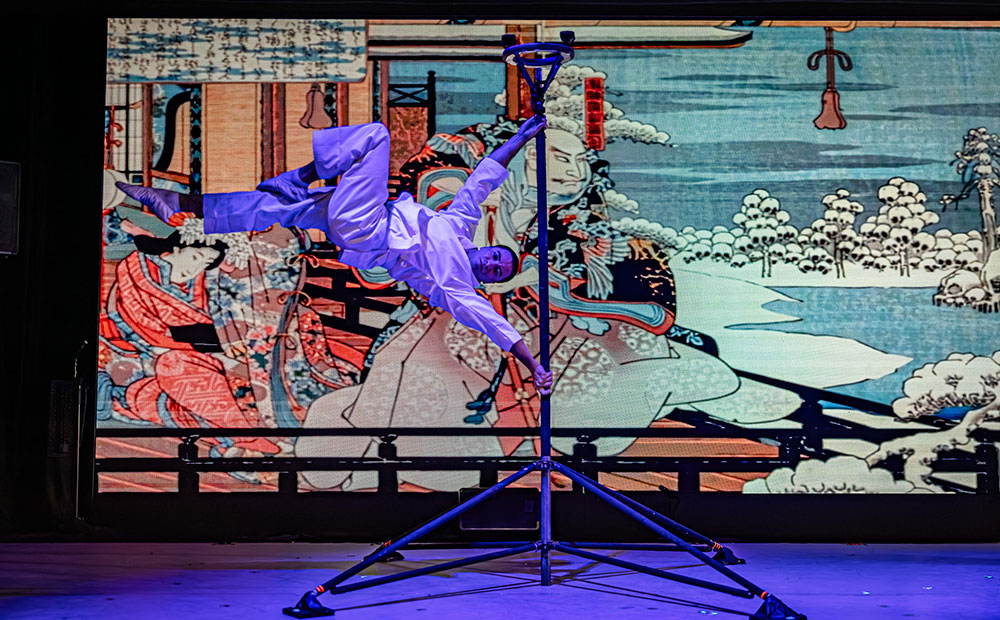
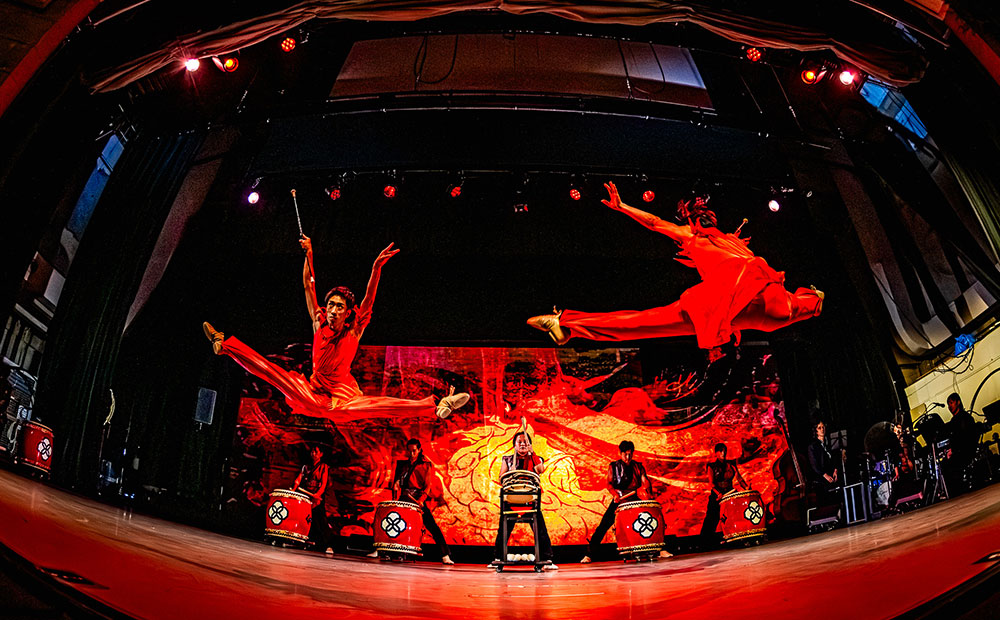
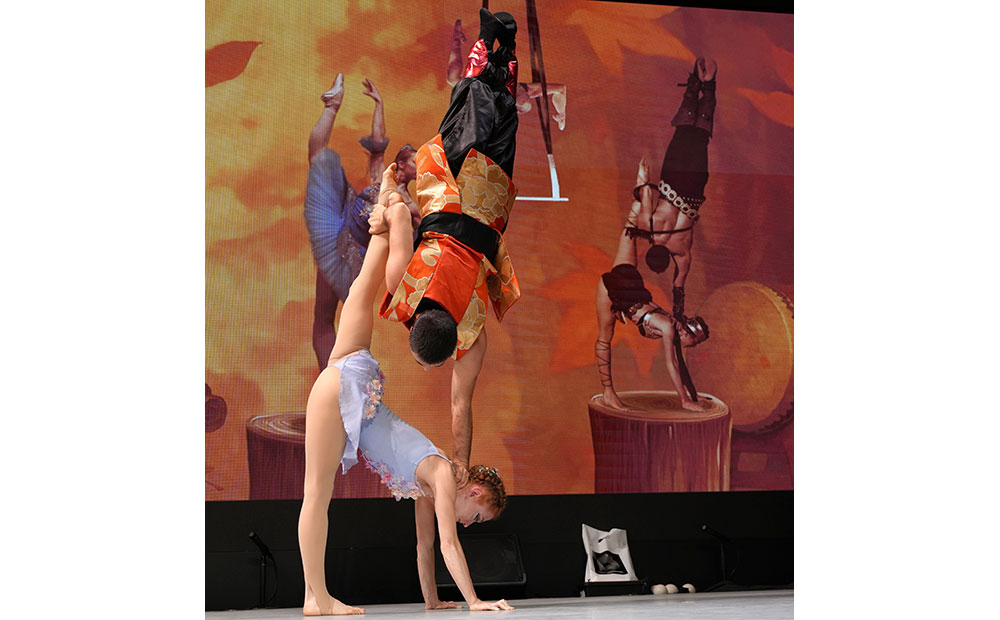
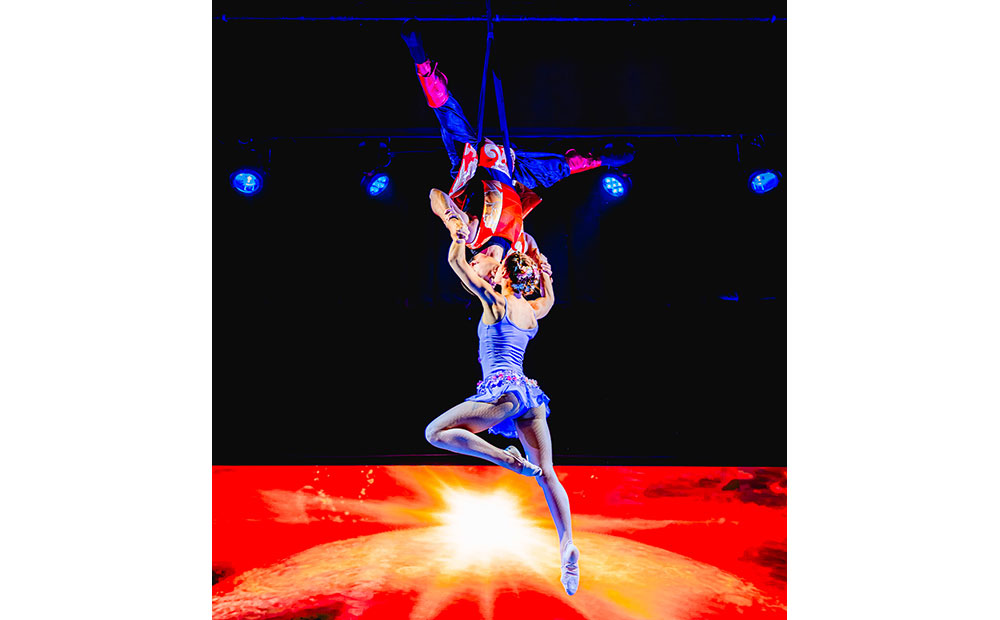
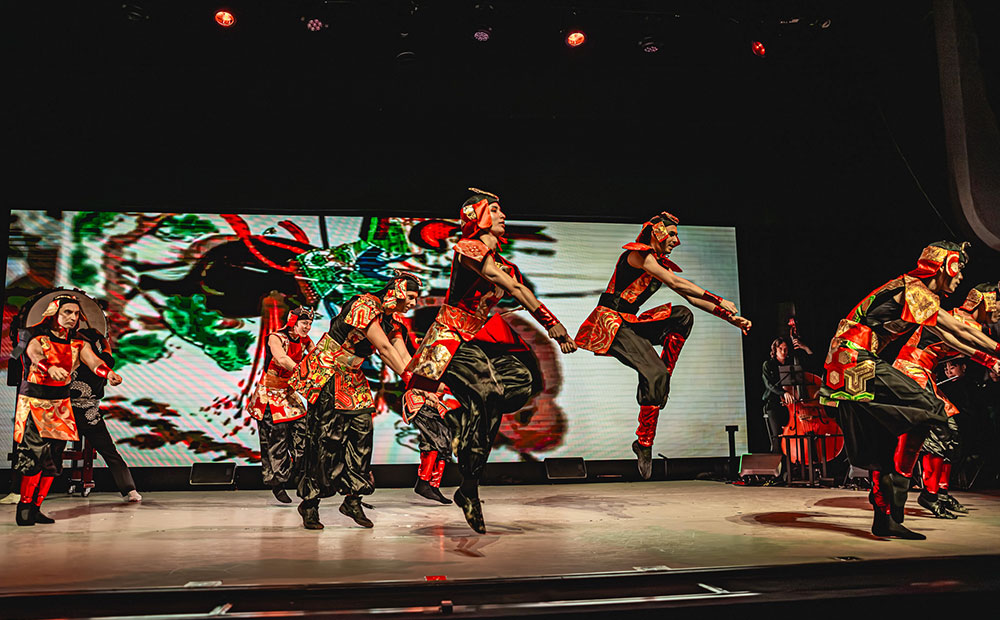
Wave-like acrobatics, juggling that flies like arrows of light, and dynamic, expressive bodies awaken memories of battle. Within a space where glory and ruin, dreams and reality intertwine, the story is revived in a new form. Audiences are invited to embark on an exciting and heart-stirring journey through history.
The Tale of the Heike is a story that depicts the battles between the Genji (Minamoto) and the Heike (Taira), two powerful warrior clans, which took place in Japan around 800 years ago. It tells of the rise to glory of the Taira clan and their eventual downfall. Beginning with the famous line, “The sound of the bells of the Gion Shōja,” this masterpiece continues to convey Japan’s history and cultural spirit to the present day.
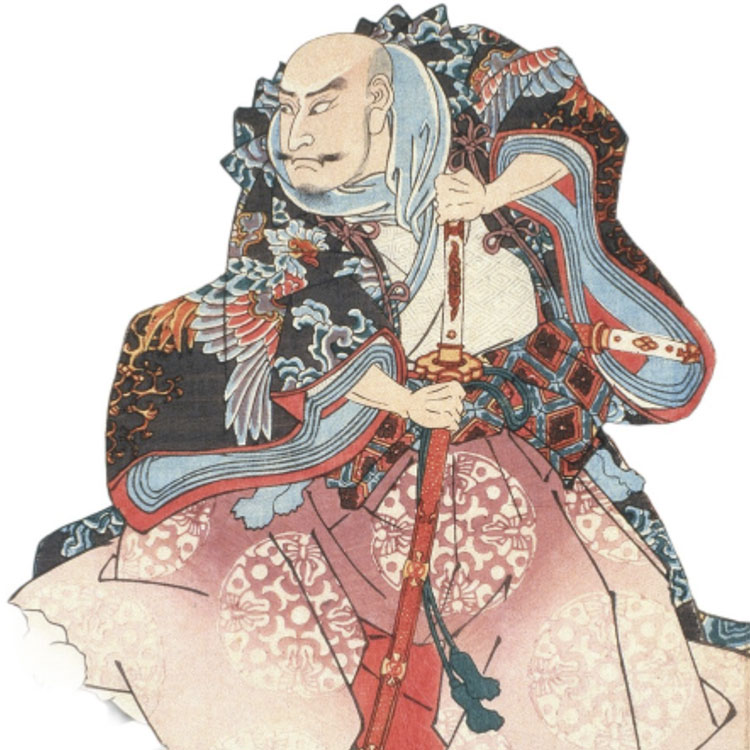
Taira no Kiyomori (1118–1181) was the first samurai to rise to the pinnacle of political power in the late Heian period and the figure who established the prosperity of the Taira clan. He laid the foundations of samurai rule and contributed to economic growth by promoting trade between Japan and the Song dynasty of China. He also left a lasting cultural legacy, including the development of Itsukushima Shrine.
At the same time, Kiyomori appointed many members of the Taira clan to high-ranking positions and monopolized power, which provoked widespread resentment. His hardline actions—such as the Coup of 1179 and the Burning of Nanto—further fueled opposition. After his death at the age of 64 in 1181, the power of the Taira clan rapidly declined, and they were ultimately defeated by the counteroffensive led by Minamoto no Yoshitsune at the Battle of Dan-no-ura. Kiyomori’s life symbolizes both extraordinary glory and sudden collapse.
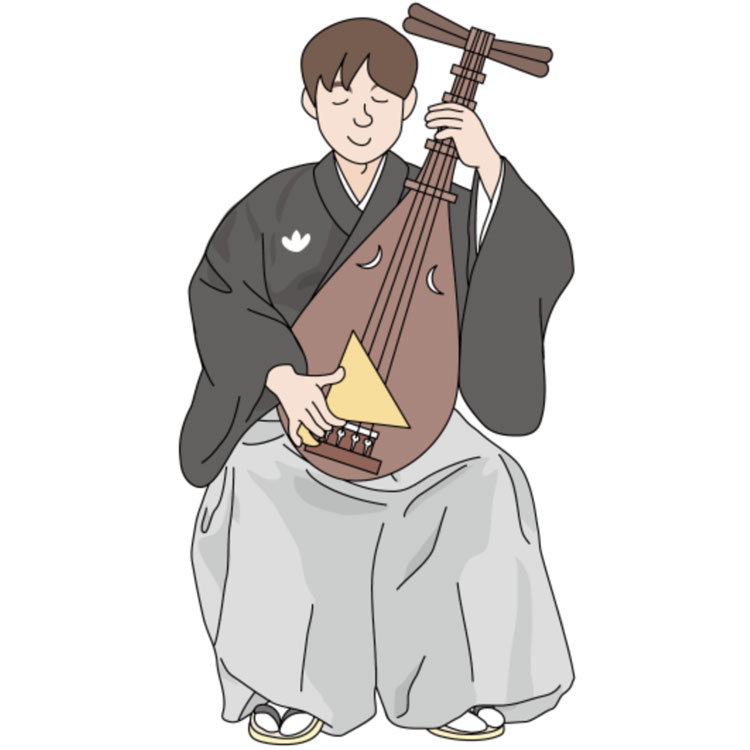
Biwa Hōshi were monk-storytellers active from the late Heian to the Kamakura period who recited tales while playing the biwa, a traditional lute. They were best known for performing The Tale of the Heike, conveying the deeds of war heroes and tragic events of history. Relying not on sight but on sound and narration, they possessed the skill to move audiences through voice and music, and were widely known in temples and towns.
Accompanied by the resonant tones of the biwa, their storytelling was rich in emotion, leaving a particularly deep impression with accounts of the downfall of the Taira clan. Their performances offered spiritual support to people living through times of conflict, and their art continues to be passed down today as an important part of Japan’s traditional culture.
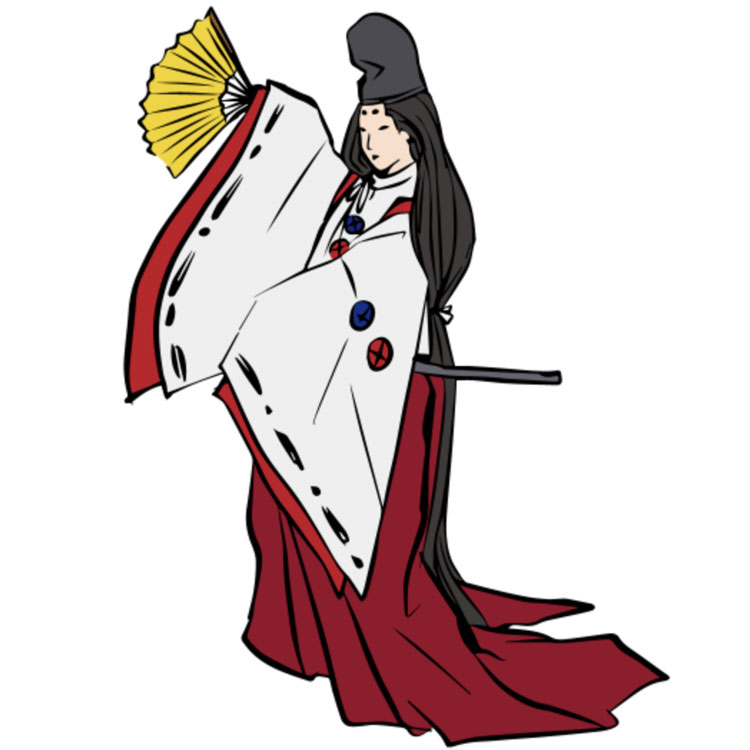
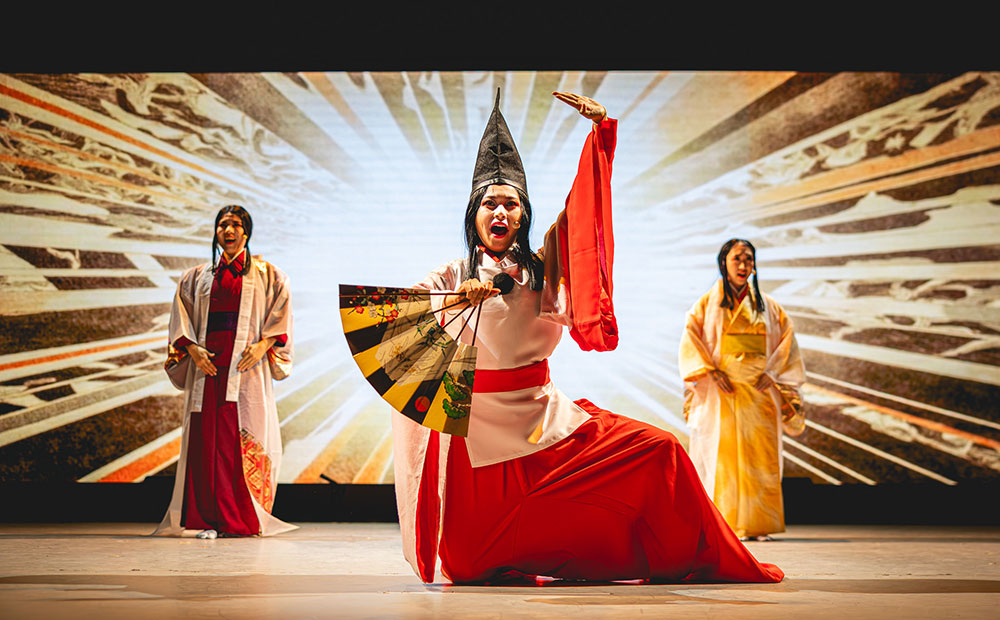
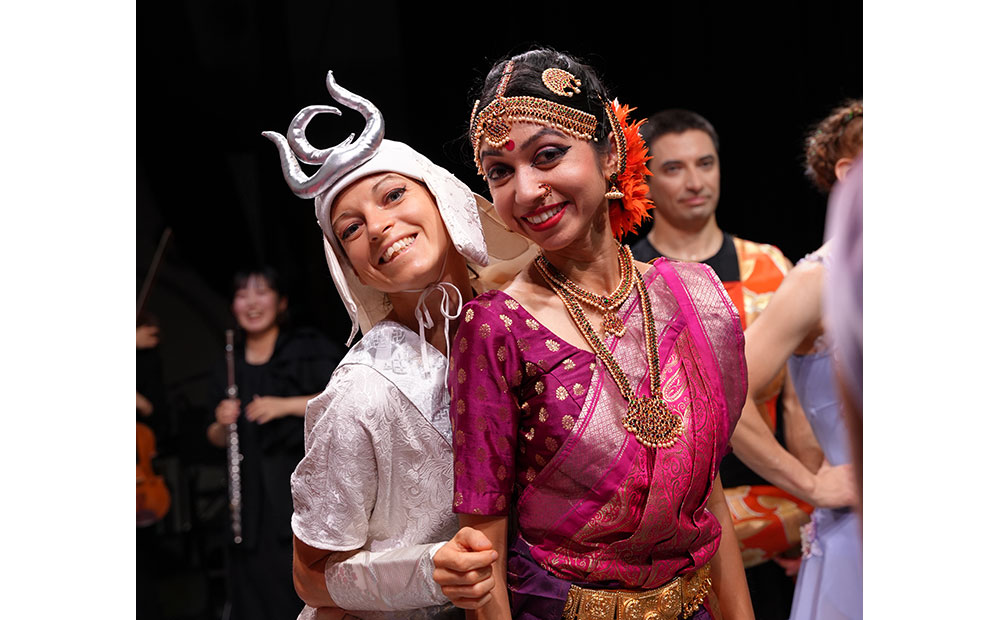
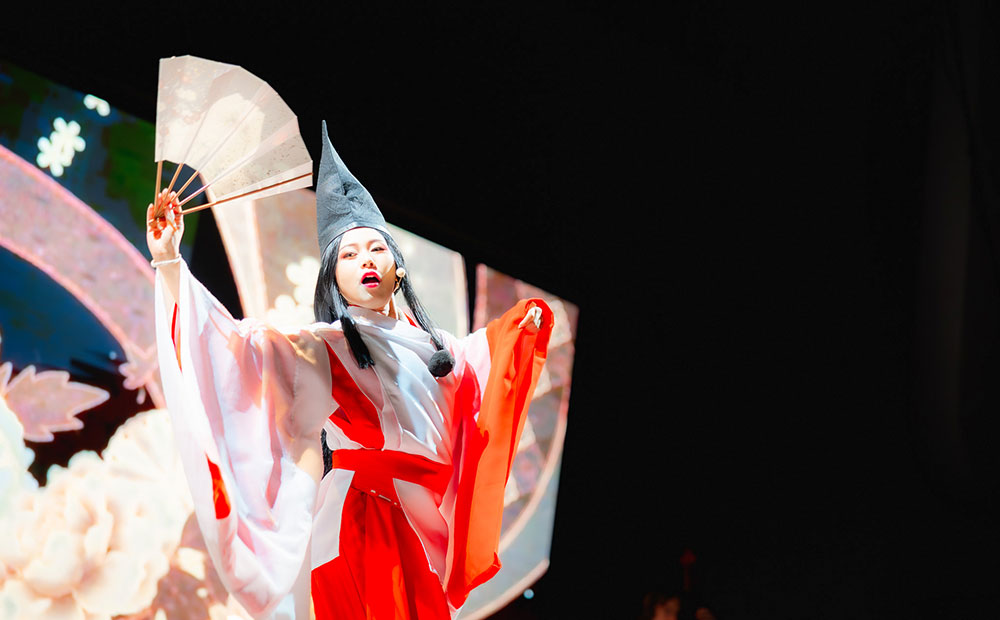
Shirabyōshi were female dancers who flourished from the late Heian period to the Kamakura period, performing songs and dances at court and at banquets hosted by the aristocracy. They were characterized by their elegant movements, dancing in white costumes in harmony with music, and played an important role in elite social circles.
Often combining dance with poetic song, their artistry was highly esteemed within aristocratic society. Their performances went beyond mere entertainment: they soothed the hearts of nobles and, at times, also conveyed subtle political messages. One of the most well-known shirabyōshi is Shizuka Gozen, famed as the beloved consort of Minamoto no Yoshitsune.
In 1180, Taira no Kiyomori feared that the great temples of Nanto (the southern capital, present-day Nara) were aligning themselves with forces hostile to the Taira clan. He therefore ordered his fifth son, Taira no Shigehira, to suppress the warrior monks.
During the fighting, fires set by the Taira forces were fanned by strong winds and spread uncontrollably, resulting in a massive blaze that even consumed the Great Buddha Hall of Kōfuku-ji. After this incident, Kiyomori further intensified his repression of the warrior monks. However, in the following year, 1181, he died after being struck by a mysterious high fever. At the time, people rumored that his death was divine punishment for the Burning of Nanto.
The Cliff Descent at Hiyodorigoe is one of the most famous episodes of the Genpei War. In 1184, during the Battle of Ichi-no-Tani, Minamoto no Yoshitsune launched a surprise attack against the Taira forces by leading his troops on horseback down a steep mountain path and over a cliff.
The descent was considered nearly impossible, yet Yoshitsune boldly advanced with a small, elite force and successfully struck the Taira army from the rear. This daring maneuver proved decisive and dramatically altered the course of the battle. Yoshitsune’s courage and audacity in this operation have been passed down through the ages as legend.

The video created for the “Cliff Descent at Hiyodorigoe” segment was produced in collaboration with local artist Kaoru Masuda.
Artwork Title: Light
“If you ever lose your way, I hope you will move toward where the light shines. No matter the circumstances, the light will always support you from behind — this work was created with that feeling in mind.”
Kaoru Masuda
Born on Awaji Island, Kaoru Masuda is a self-taught artist who works between Japan and Paris. Guided by a spirit of “giving,” he has painted together with children in India and Africa and has supported them through fundraising activities, including auctions of his artwork. He continues to create works imbued with respect for history, culture, and the human spirit, pursuing his path as an artist through challenges without instructions or predefined answers.

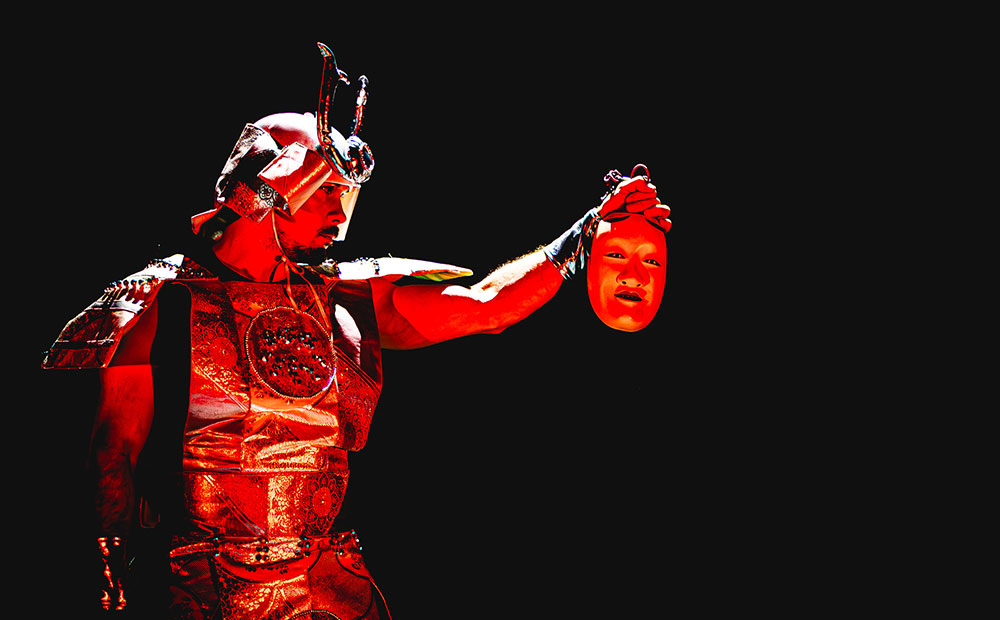
The Battle of Ichi-no-Tani was a fierce clash between the Minamoto and Taira clans in 1184. On the battlefield, Kumagai Naozane of the Minamoto faced Atsumori, a young warrior of the Taira. Kumagai overpowered him, and when he removed Atsumori’s helmet, he was confronted with the face of a youth only sixteen years old. Moved by the boy’s beauty and youth, the warriors were filled with sorrow, yet Kumagai was compelled to take his head.
There was no joy in victory. Later, Kumagai laid down his armor and devoted himself to the Buddhist path. The sound of the flute played by Atsumori is said to still remain at Suma-dera Temple, and the story of his fleeting life continues to touch the hearts of many to this day.
The legend of the “Fan Target (Ogi no Mato)” takes place on the sea off Yashima. As the Taira clan found themselves cornered, they raised a fan atop a small boat and challenged the Minamoto forces. At that moment, Nasu no Yoichi stepped forward with his bow, calmly taking aim at the fan as it swayed in the wind and waves.
With a single shot, his arrow pierced the moving fan perfectly, causing both the Minamoto and Taira warriors to hold their breath in awe. This single arrow, which had a profound impact on the course of the battle, has been passed down as a symbol of Yoichi’s courage and extraordinary skill. The Fan Target came to represent the tension of the battlefield and the spirit and morale of the warriors.
The Battle of Dan-no-ura was fought in 1185 in the waters off present-day Shimonoseki between the Minamoto and Taira clans. Beneath the red banners of the Taira and the white banners of the Minamoto, the two forces clashed fiercely at sea. Under the command of Minamoto no Yoshitsune, the Minamoto ultimately secured victory.
Amid the powerful tidal currents, Minamoto ships steadily closed in on the Taira fleet, and many Taira warriors leapt into the sea as defeat became inevitable. Realizing the loss, Emperor Antoku of the Taira clan entered the water as well, held in the arms of his grandmother. With this battle, the Taira clan was destroyed, and the Minamoto seized control of the nation.
Script & Direction
Elena Gradkovskaya
Art Director, Contemporary dancer with a Master's degree from the Vaganova Ballet Academy in Russia.
Since 2017, she has served as the artistic director, playwright, and director of the international performing arts festival Awaji Art Circus held on Awaji Island, Hyogo Prefecture. Her works include Gods Among Us, Miketsukuni Memoirs, Alice in Awajiland, Living Legends of Awaji Island and.Memories of the Heike.

Production Team
Script, Structure, Direction:Elena Gradkovskaya
Script Adviser, Production Supervisor:Mai Moriguchi
Band Music: Chief Composer & Lyricist:Ayumi Omori
Composing Staff:Han Tzu Yang
Costume Designer:Anna Zawadzka
Costume Support:Gemma Pascual
Production Staff:Ryo Oguri
Production Assistat:Yukari Hayashi
Technical Staff
Stage management:Tetsya Oguri
Sound design & operation:Bara-san
Lighting design & operation:Yukina Oda
Video Production:Kazuki Shimada
Video Operation:Laci, Tomoaki Suda
Aerial rigger:OGI, IPPO, Nancy, Haruka, maya, Sachi (Pirates Stunt)
Management Team
Elena Bzhola
Elena Gradkovskaya
Kaori Nakafuji
Bitieva Evelina
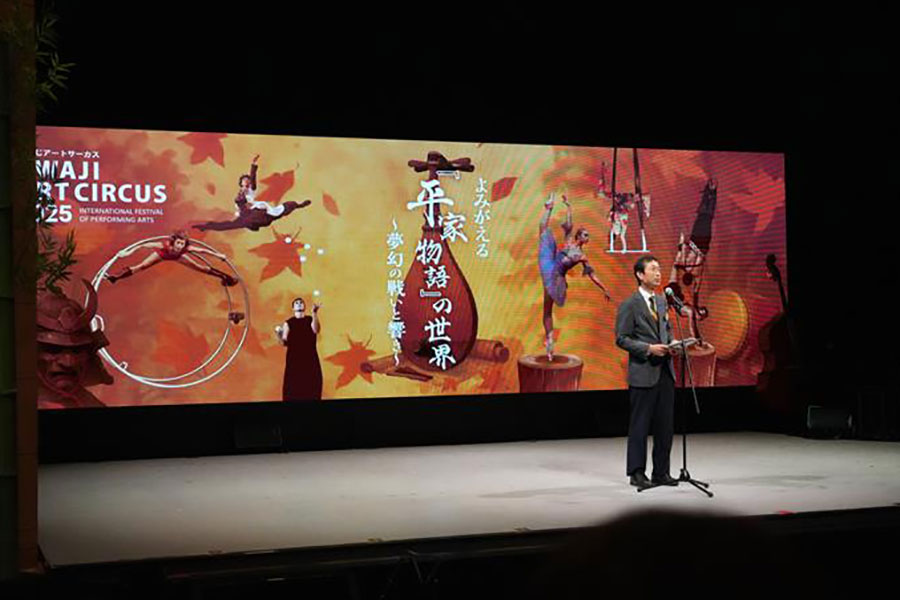
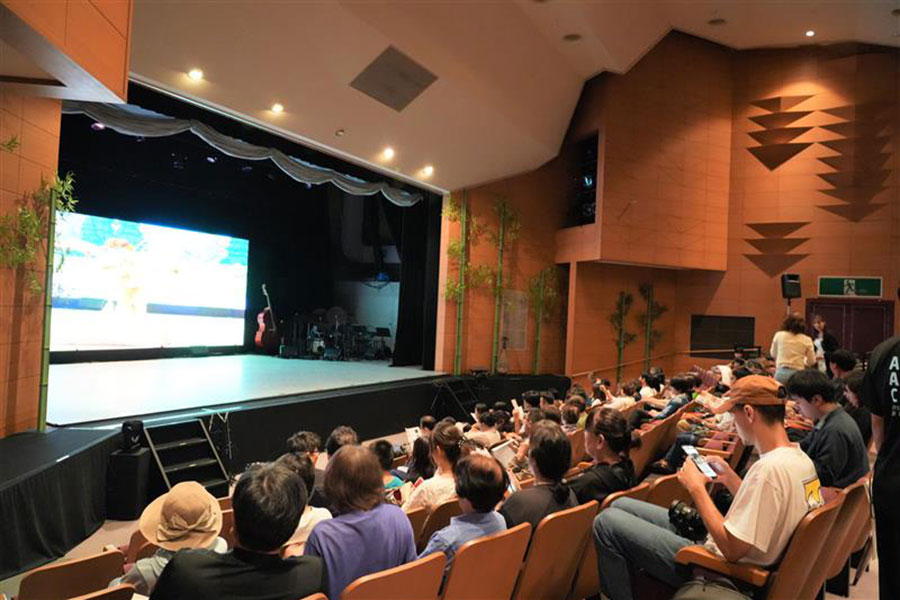
Date & Time: October 12 (Sun), 2:00 PM
Venue: Assemblée Hall
Program:
・Opening Remarks
(Chairperson of the Awaji Art Circus Executive Committee / Mayor of Minamiawaji City, Mr. Morimoto)
・Screening of the 2025 Activities Highlights Video
・Performance: "Whispers of a Vanished Battlefield~Memories of the Heike~"
・Closing
Audience Comments

It was absolutely worth coming all the way from Tokyo! I’ve never seen a circus like this before—it was truly art!!
(Man in his 50s, Tokyo)
From beginning to end it was so overwhelming that my whole body stayed tense the entire time—I was completely exhausted by the end. Of course, each performer was incredible, and I found myself totally absorbed in following every single one of them. At the same time, the direction and structure were outstanding—everything was simply too wonderful for words.
While carefully highlighting the key moments of The Tale of the Heike, the production also fully showcased each performer’s acting. It’s truly beyond description. To be honest, I never imagined I would see something of this caliber at this price, so I wasn’t mentally prepared. I was utterly overwhelmed by the sheer power of the art and left completely speechless.
(Woman in her 50s, Hyogo)


It was absolutely wonderful—there’s no other way to describe it. The storytelling, singing, and dancing… it’s been a long time since I’ve seen such a beautiful stage. I was deeply moved. Thank you very much to Yuji Fujisaki and everyone involved.
(Woman in her 70s, Hyogo)
Everything was so incredible that I didn’t even know when to clap—that’s how amazing it was. I definitely want to see the remaining performances as well. I think today’s show will truly be a once-in-a-lifetime memory for me. Please perform here again. It was seriously amazing!!
(Teenage boy, Awaji Island)


I was deeply moved by this circus and stage production—unlike anything I’ve ever seen before. It was truly wonderful. I would love to see it again.
(Woman in her 40s, Osaka)
I couldn’t stop getting goosebumps.
(Woman in her 30s, Awaji Island)


The power was incredible! I watched with tears welling up in my eyes. The music, acting, ballet, and dance—every single element was amazing. The direction was excellent, and the visuals projected behind the stage were fantastic too!
(Woman in her 20s, Saitama Prefecture)
School Shows
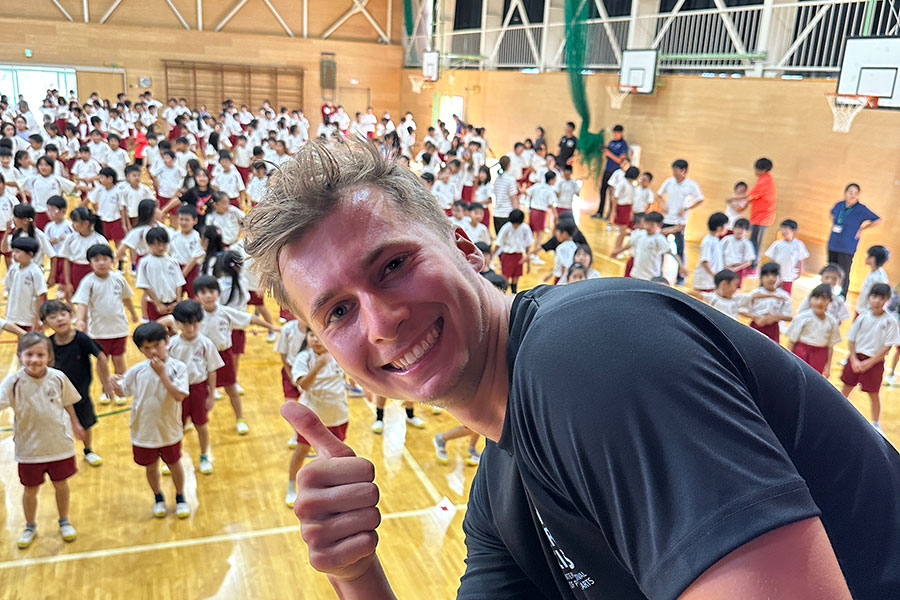
Purpose
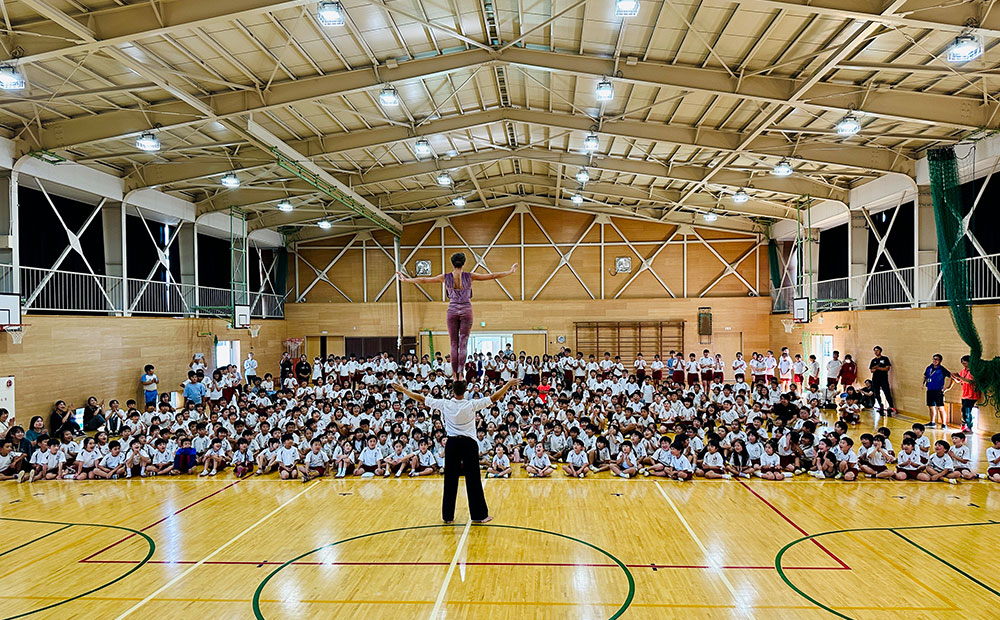
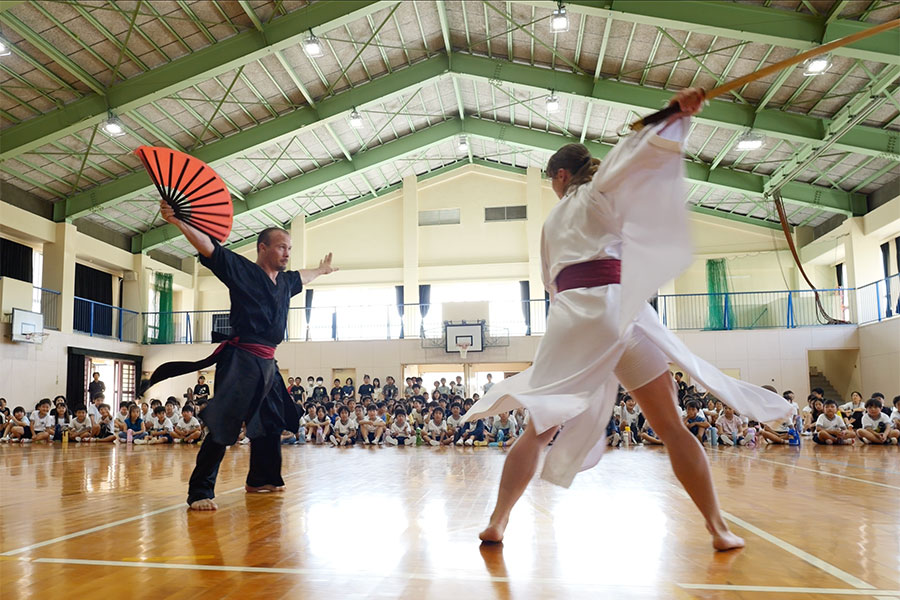
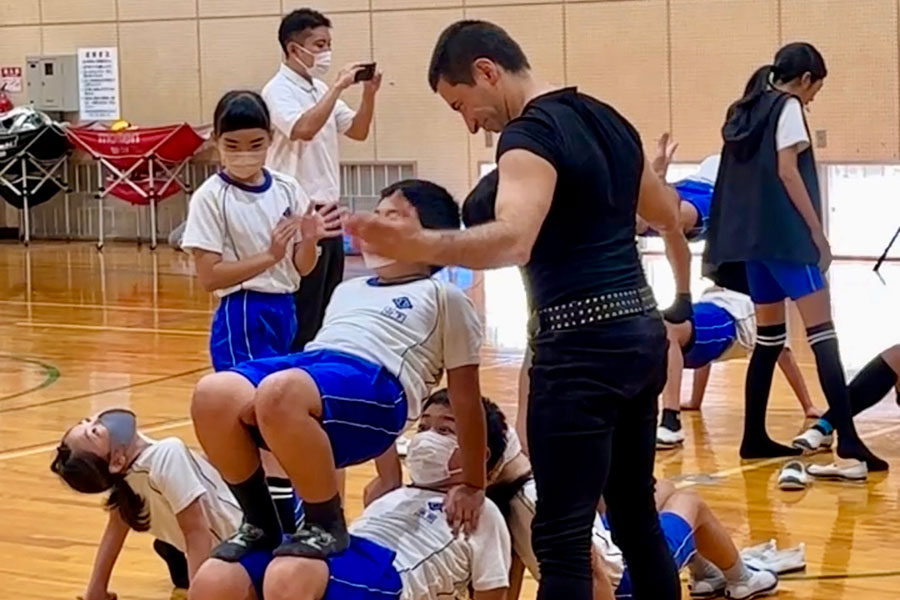
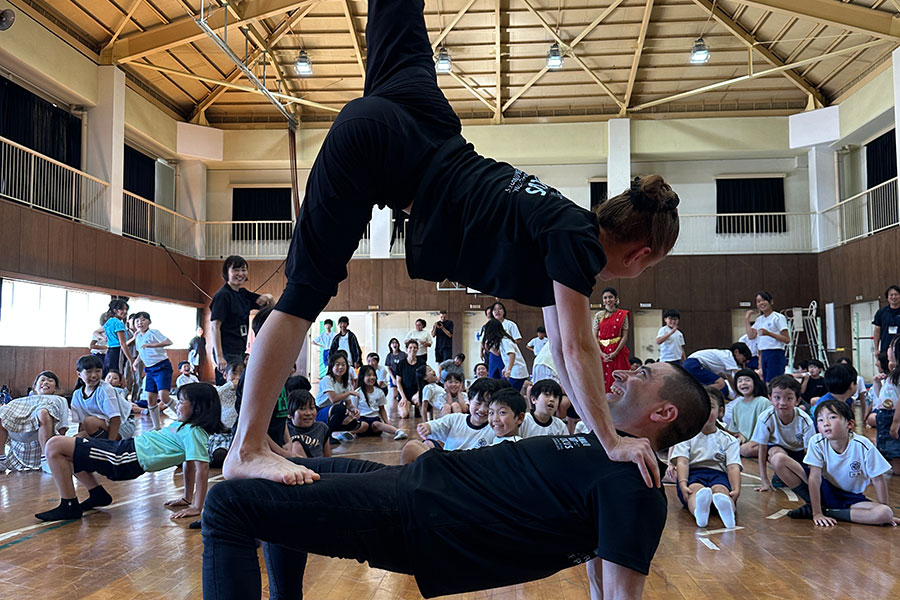
Since 2016, Awaji Art Circus has conducted school outreach performances. Through this program, the goal is to deepen children’s understanding of culture and the arts and to broaden their horizons.
At the same time, the program aims to expand understanding of life and work as a performer, and by experiencing a variety of performances, students gain a deeper appreciation for the performing arts.
From 2016 to 2025, a total of 66 performances were held at elementary and junior high schools across the three cities of Awaji Island.
Program Details
Original shows by domestic and international artists & movement-based workshops
Participating Schools & Schedule (8 schools on the island)
Sep 19 (Fri) Awaji City Hokudan Elementary School
Sep 19 (Fri) Awaji City Omachi Elementary School
Sep 22 (Mon) Awaji City Ura Elementary School
Oct 15 (Wed) Sumoto City Kamo Elementary School
Oct 15 (Wed) Sumoto City Daisan Elementary School
Oct 16 (Thu) Sumoto City Sakai Elementary School
Oct 21 (Tue) Minamiawaji City Minato Elementary School
Oct 22 (Wed) Minamiawaji City Kashu Elementary School
Number of Participants
Approximately 1,600 children, including nearby nursery school students and parents
Performances at Events On and Off Awaji Island
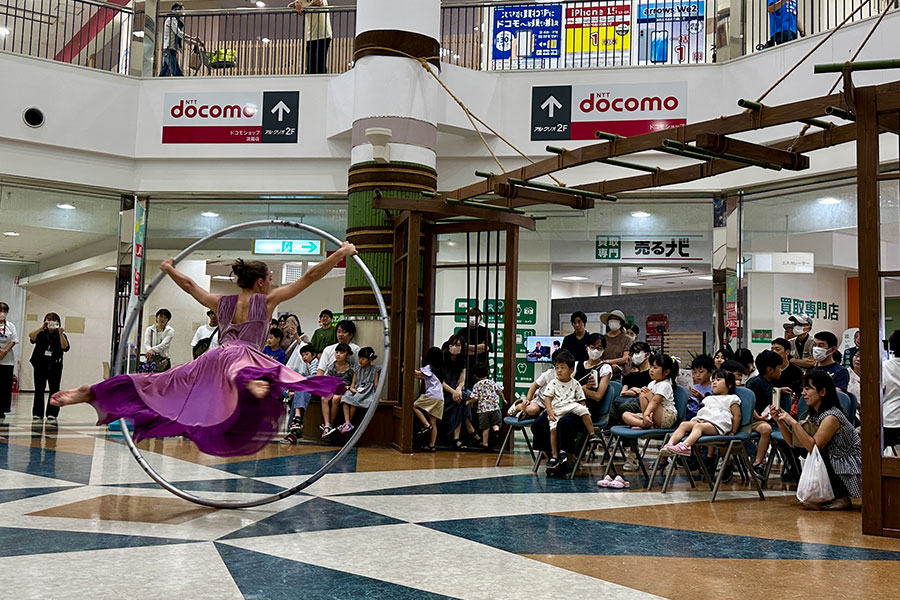
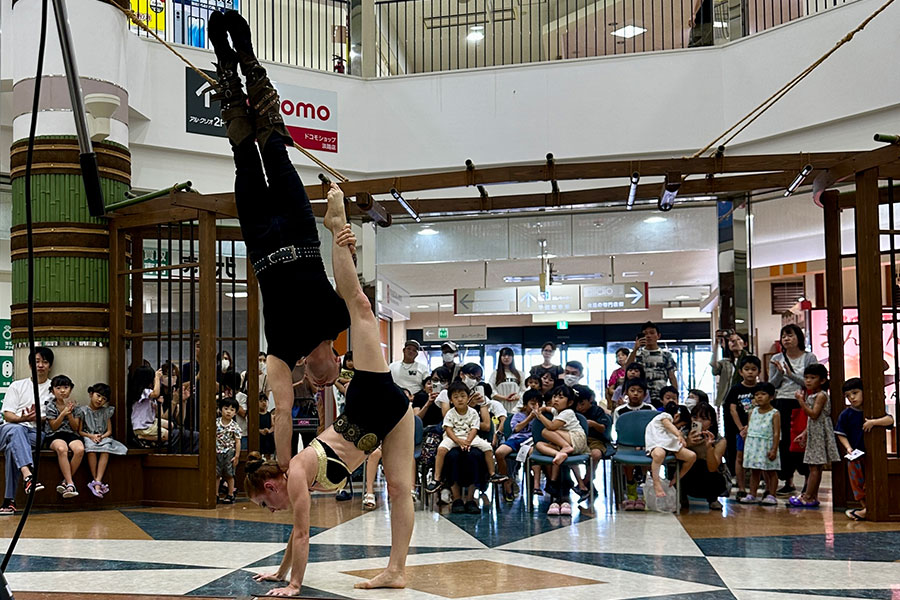
Ahead of the “Tale of the Heike” performances starting on October 12, a special show was held to give the local community a sneak peek of the performance.
At this event, a variety of acts—including acrobatics, juggling, and balance performances—were presented one after another, filling the venue with cheers and applause. The excitement and energy captivated both children and adults, transforming AEON Awaji Store into a miniature circus theater.
The event offered an opportunity to fully experience the performers’ energy and charm ahead of the main “Tale of the Heike” production. Many visitors stopped to watch, creating a moment that truly highlighted the warm support of the local community.
Date & Time: September 20 (Sat), 11:00 AM – 12:00 PM
Venue: AEON Awaji Store
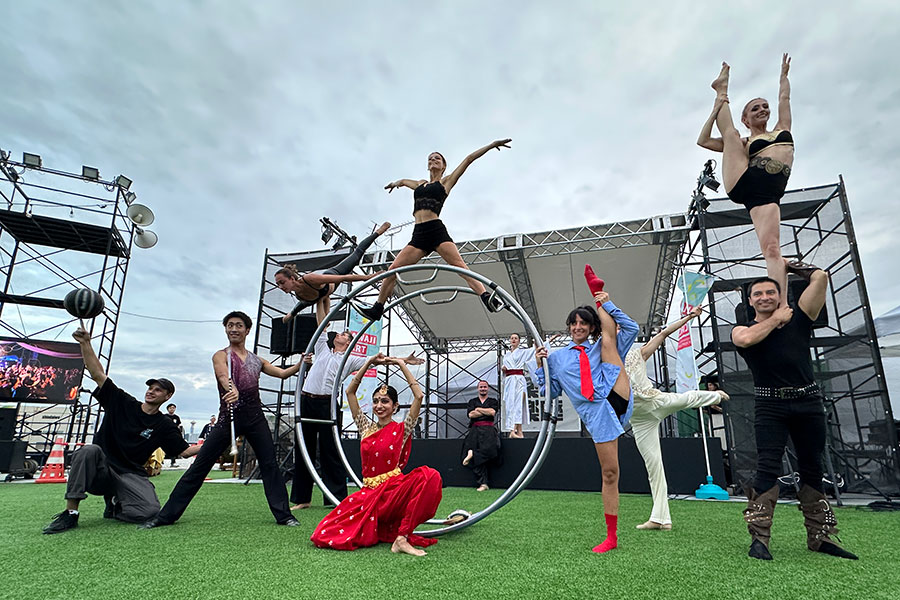
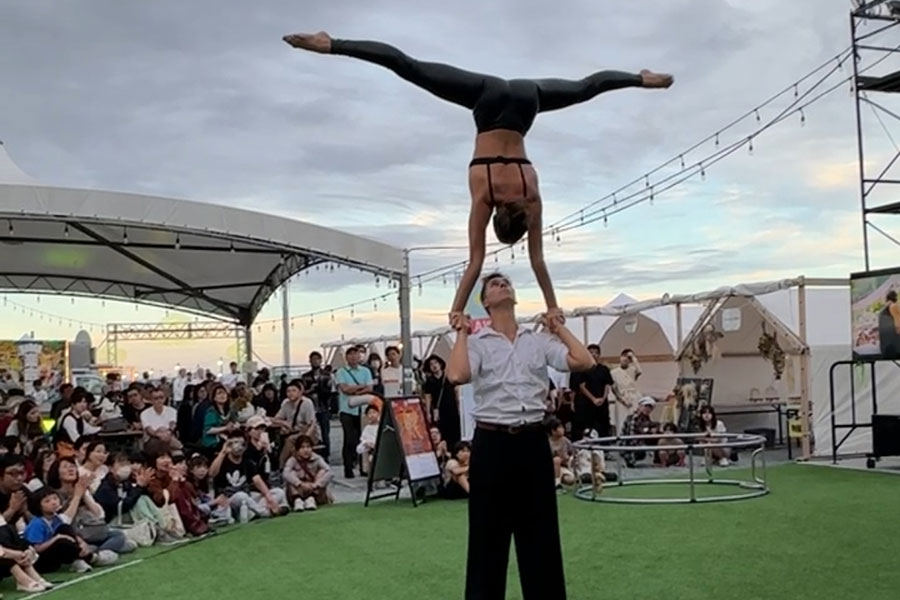
During the “Awaji Island Day” on October 11 (Sat) at Hyogo Gakuichi Gakuza, an event hosted by Hyogo Prefecture during the Osaka-Kansai Expo period, all artists from Awaji Art Circus performed on a special stage.
A large audience gathered, cheering enthusiastically for the powerful performances. Visitors enjoyed the diverse acts presented by the international artists. This event provided an excellent opportunity to introduce the charm of Awaji Island and Awaji Art Circus to a wide audience.
Date & Time: October 11 (Sat), 4:40 PM – 5:20 PM
Venue: Amagasaki Phoenix Project Site
Number of Attendees: Approximately 1,000
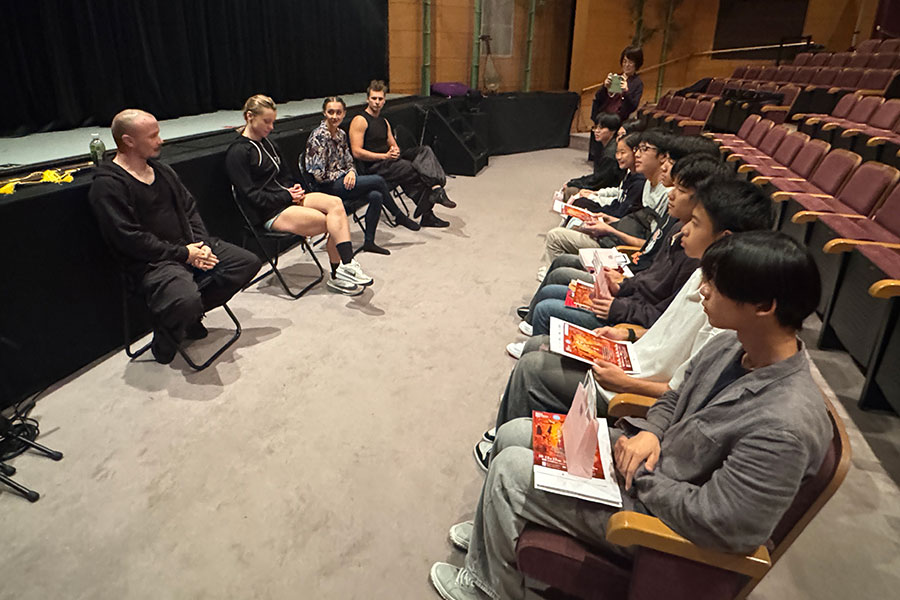
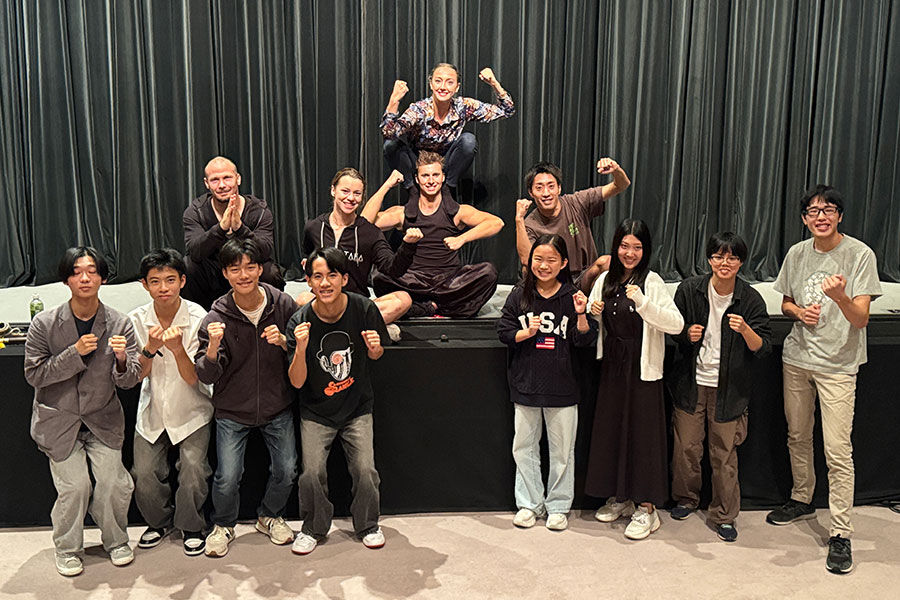
An event was held for students learning English, providing an opportunity to interact with the artists in English.
Target Audience: Groups of 10 or more
Participants:
Students from Kobe Women’s University
Students from AIE International High School
Cost: Free (limited to those who attended the performance)
Program:
1. Self-introductions in English
2. Q&A session: Students ask questions to the artists in English
3. Artists ask questions to the students
4. Group photo
The students actively engaged, asking questions and conversing in English. Since all participating artists were non-native English speakers, the event offered a valuable opportunity to experience a variety of English accents. It also reinforced the importance of English as a global language.
Participants Feedback
Participant A:
"During the exchange meeting, the foreign performers answered our questions politely, and the warm and friendly atmosphere that shone through was very heartwarming. I sometimes struggled to find the right words in English, as my skills are still limited, but this experience made me feel that I want to courageously express my thoughts, even if imperfectly, from now on."
(Student, 4th-year, International Liberal Arts, Kobe Women’s University)
Participant B:
"I was very happy to have the opportunity to interact with the foreign performers. They shared what they enjoy about their work and what inspired them to start circus, which left a strong impression on me. I may not know much about circus myself, but listening to how everyone shared their experiences was extremely interesting."
(International student, Japanese Language and Literature, Kobe Women’s University)
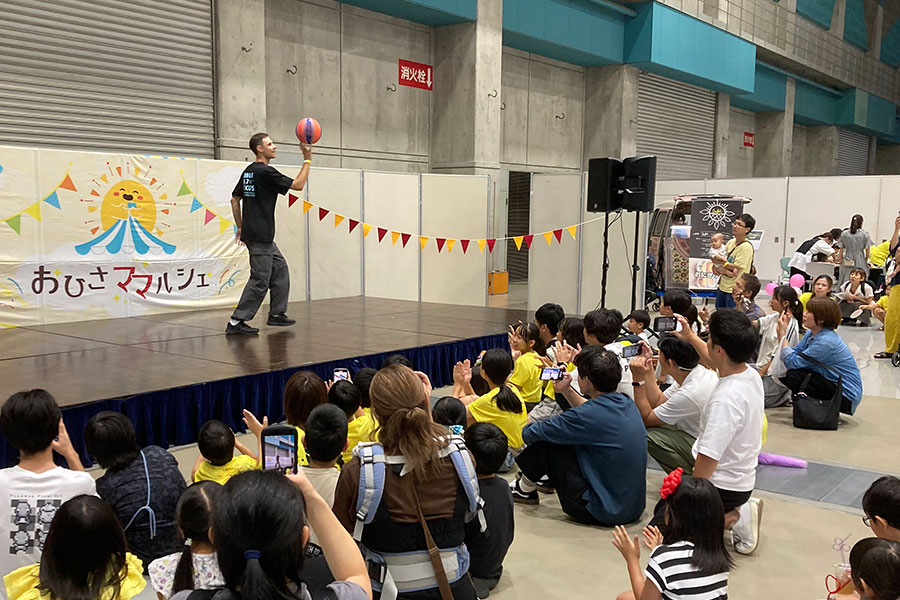
Ohisamama Marche (Kagawa Prefecture)
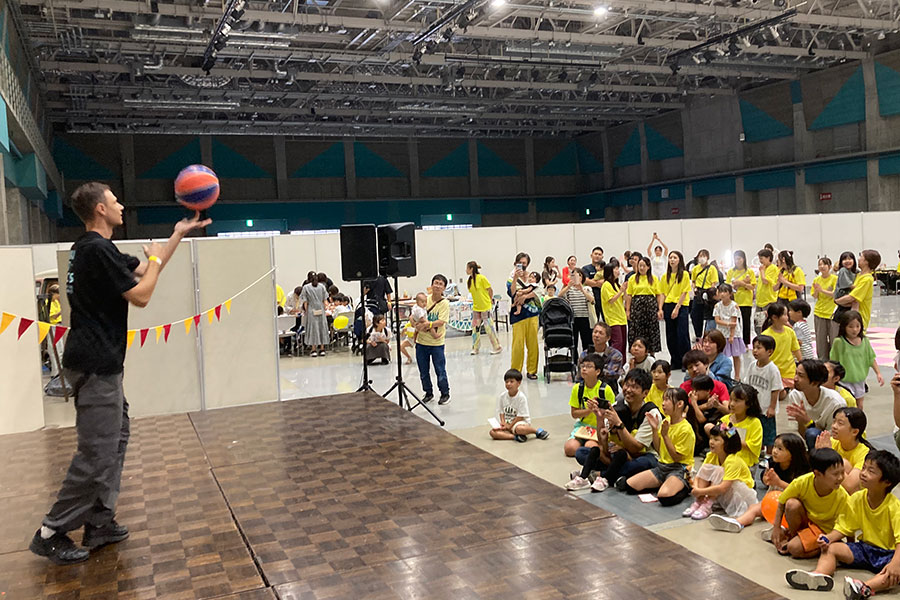
MobiWell Awaji(Awaji City)


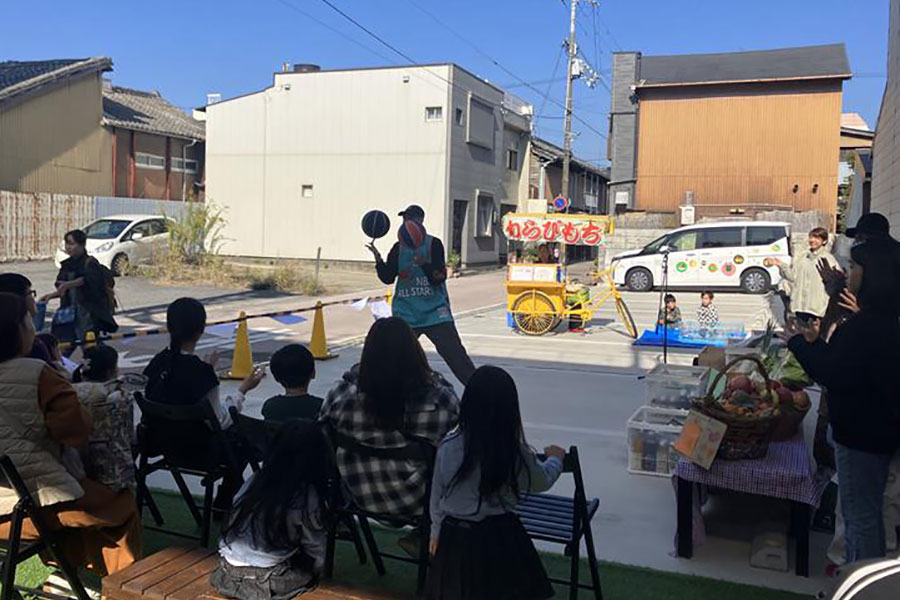
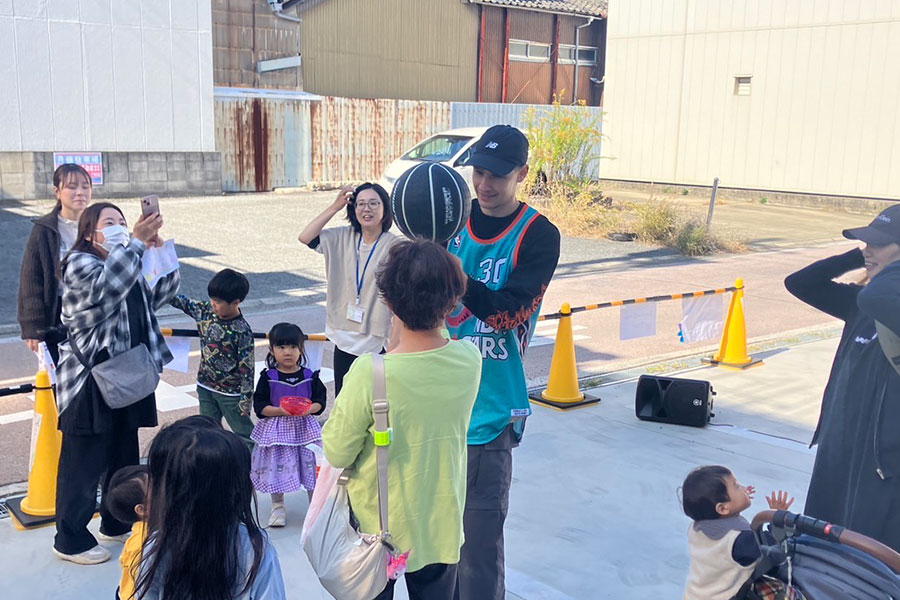
Mira Festival Autumn Celebration (Sumoto City)
Cultural Program for Artists
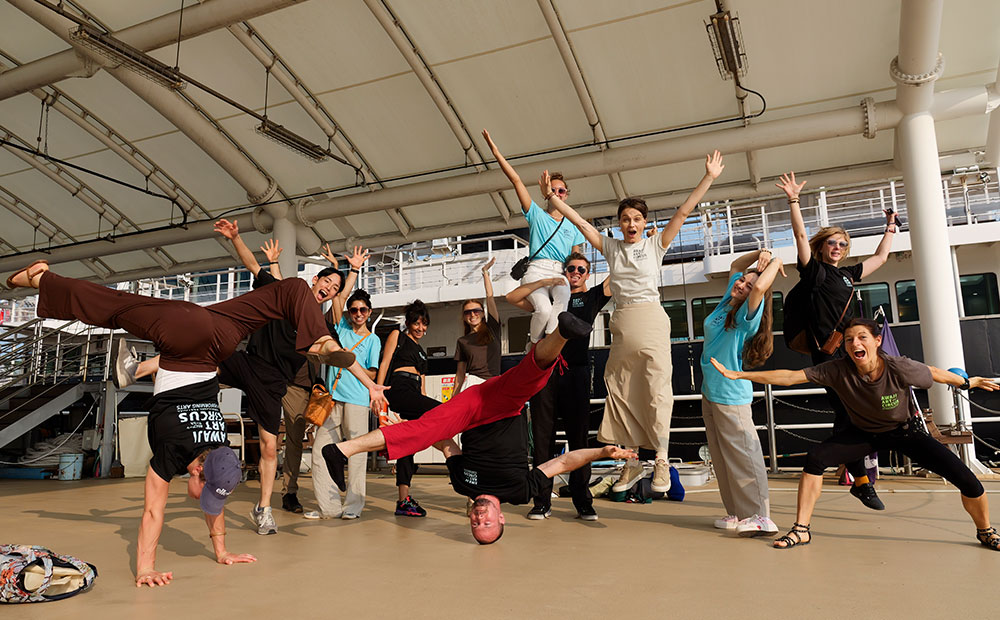
The mission of Awaji Art Circus is to contribute to the revitalization of Awaji Island. To achieve this mission, artists not only perform at a variety of venues, but also immerse themselves in the island’s local culture and attractions, sharing the charm of Awaji Island with the world. In order to offer artists rich and diverse experiences, we prepared special tourism and cultural programs.
To help them experience the appeal of Awaji Island more deeply, artists were guided to various locations across the island, including the historic Izanagi Shrine, Awaji Yumebutai, an architectural work by Tadao Ando, the Naruto Whirlpools, known as a rare natural phenomenon, Wakato no Hiroba Park with its breathtaking views, and Awaji Hanasajiki. In addition, to deepen their understanding of Japanese culture and local resources, we organized a wide range of workshops, such as traditional fukimodoshi (paper blow toy) making, scented sachet crafting, and Japanese taiko drumming experiences.
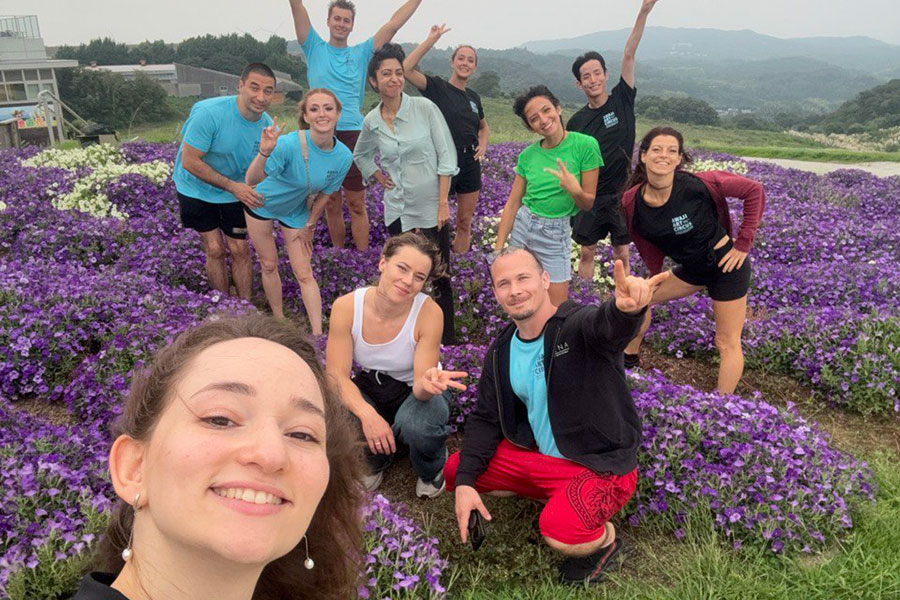
Visit to Awaji Hanasajiki
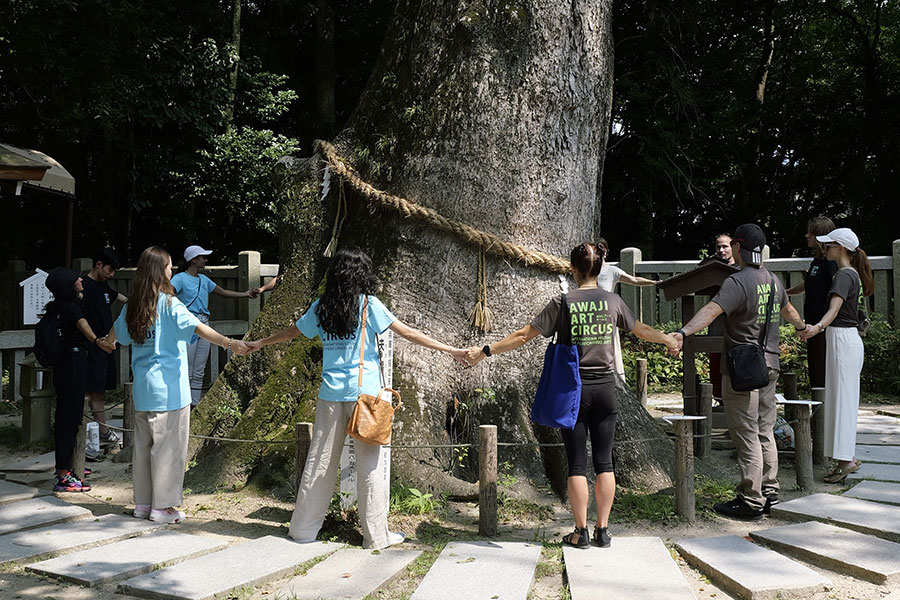
Formal Worship Visit to Izanagi Shrine
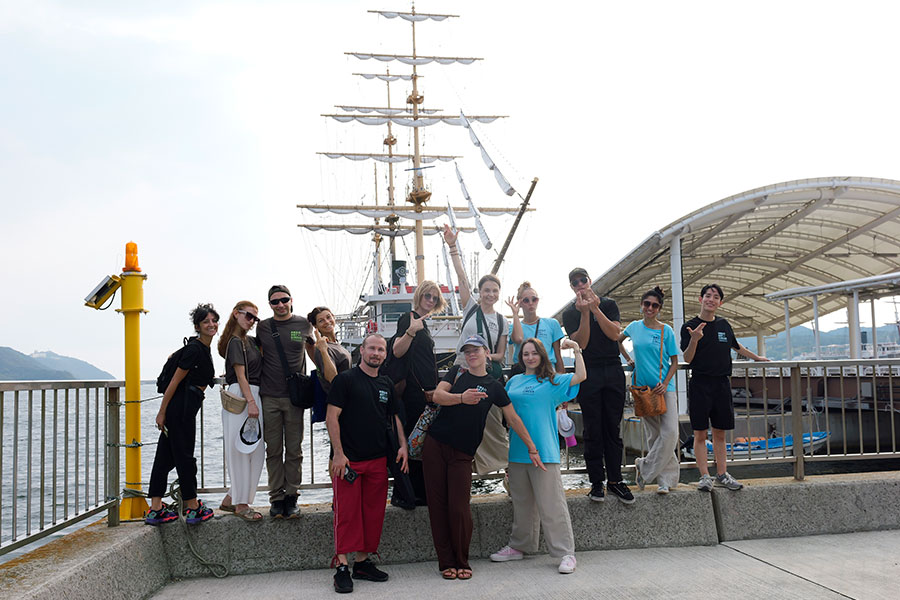
Naruto Whirlpools Cruise Experience
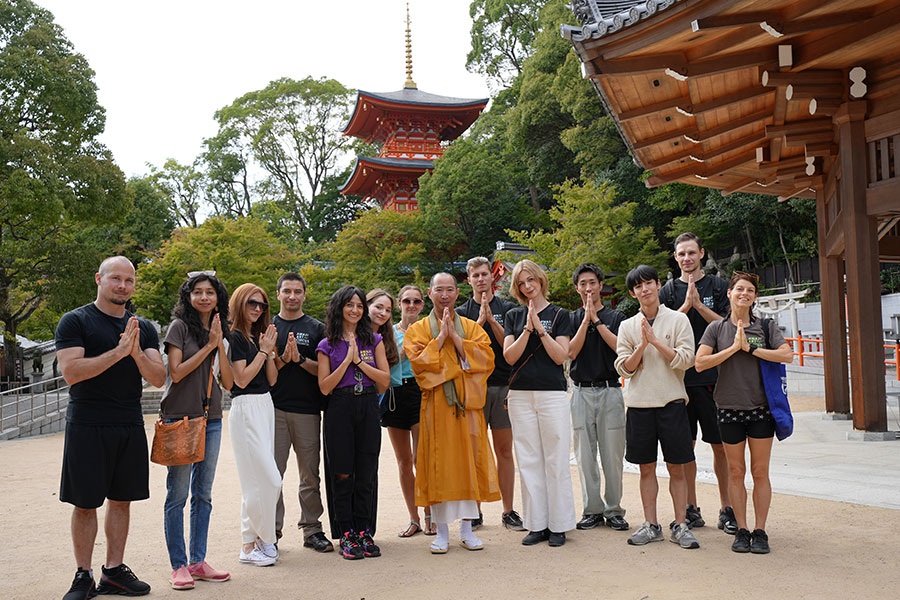
Visit to Suma-dera Temple, a Historic Site Associated with the Genpei War
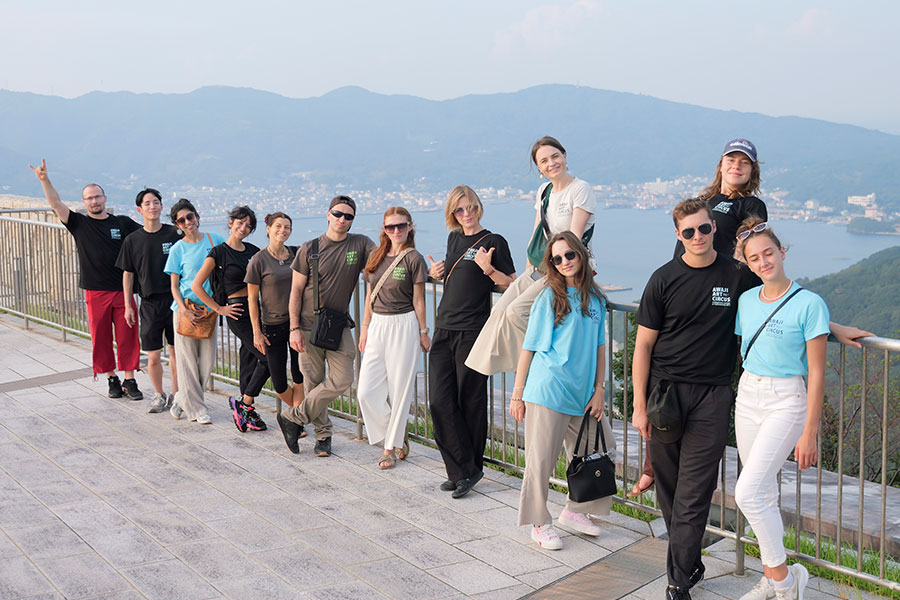
Visit to Wakodo no Hiroba Park
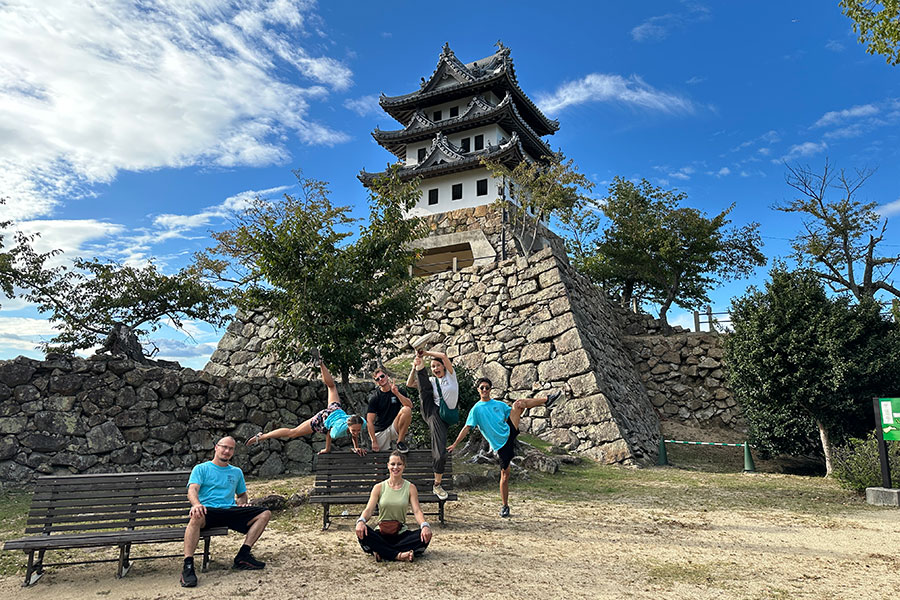
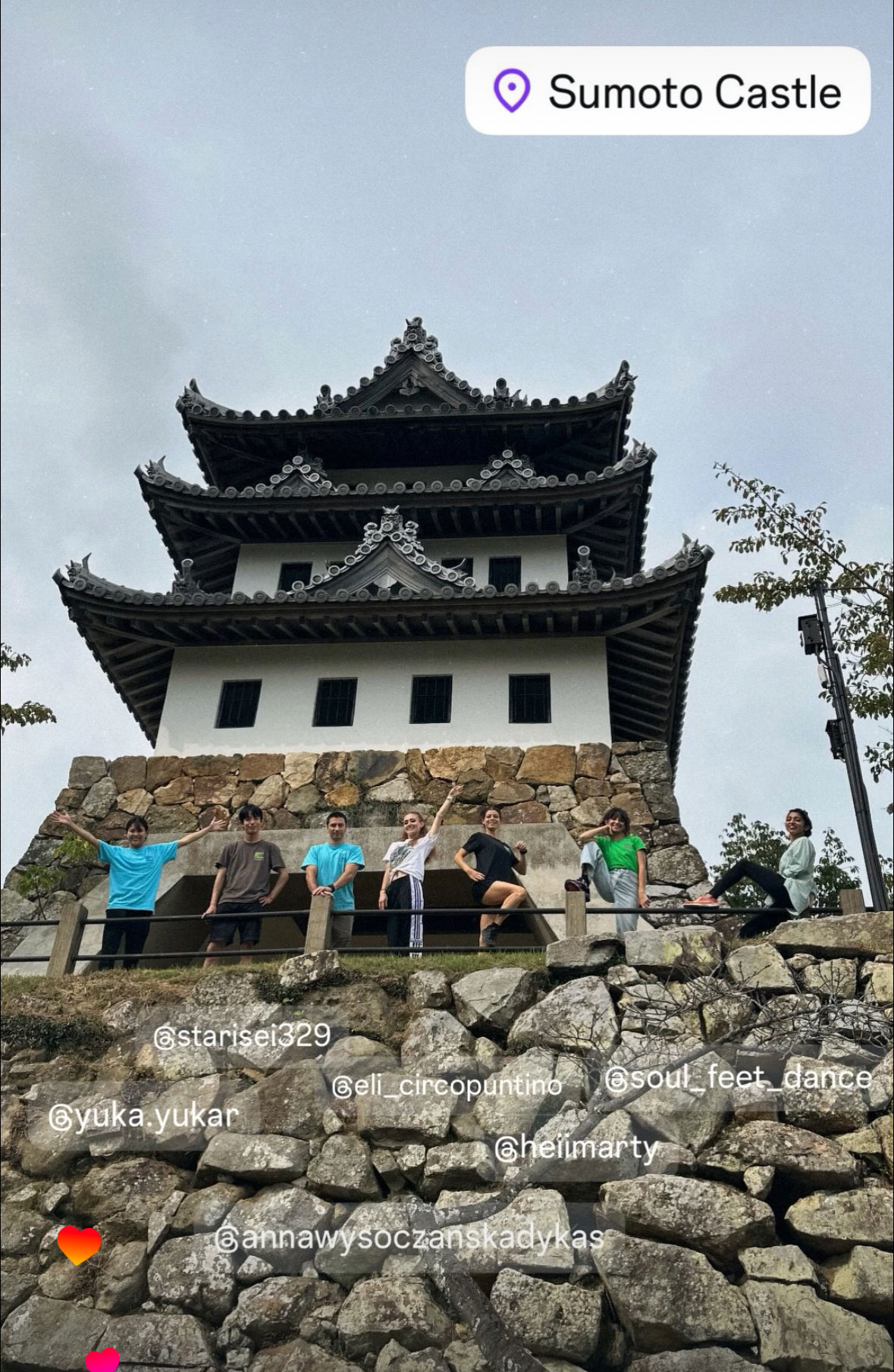
Visit to Sumoto Castle
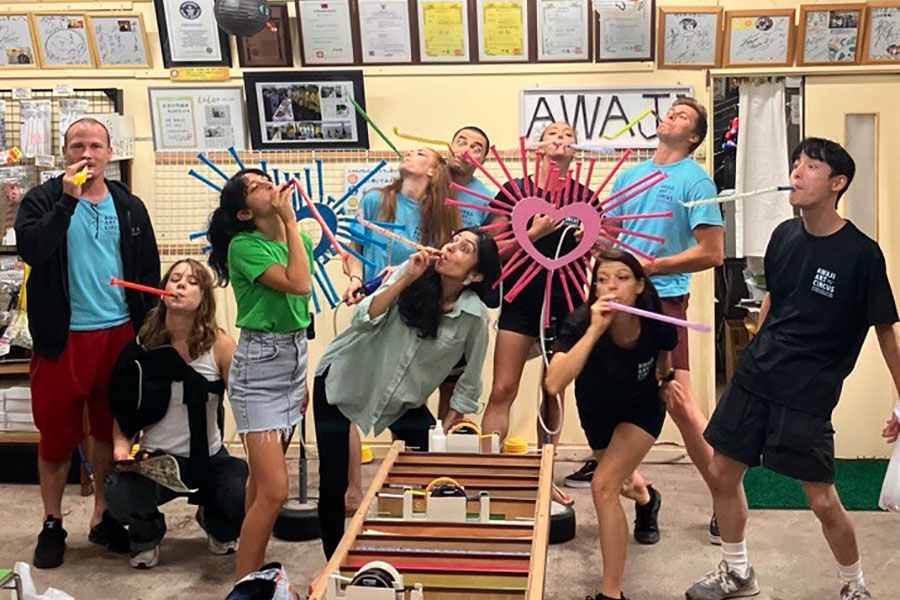
Paper Whistle Making Workshop
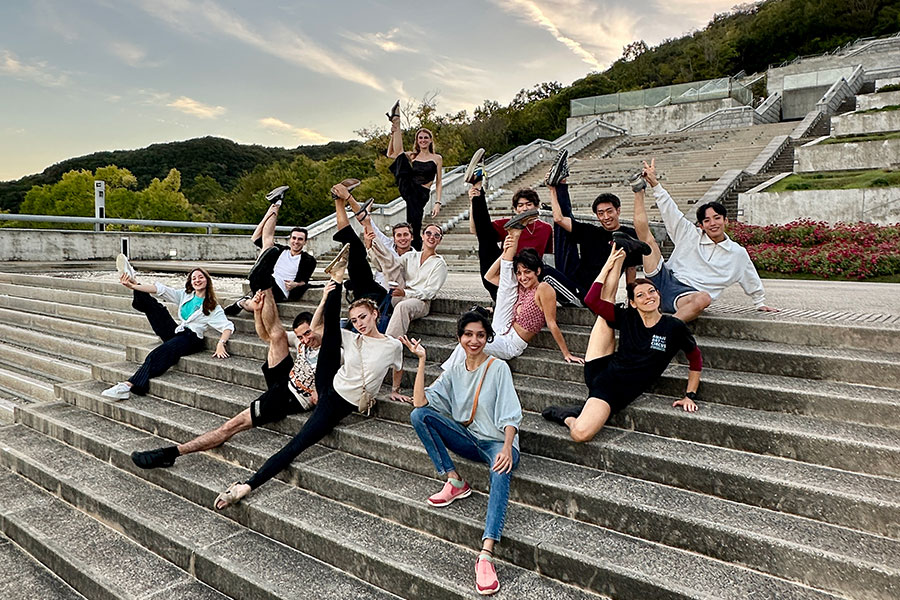
Visit to Awaji Yumebutai
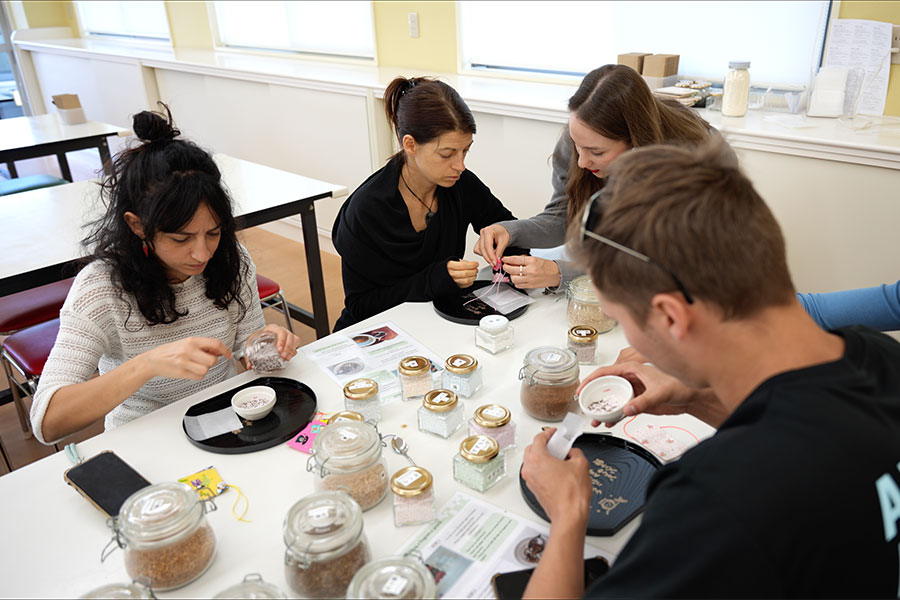
Scented Sachet Making Workshop
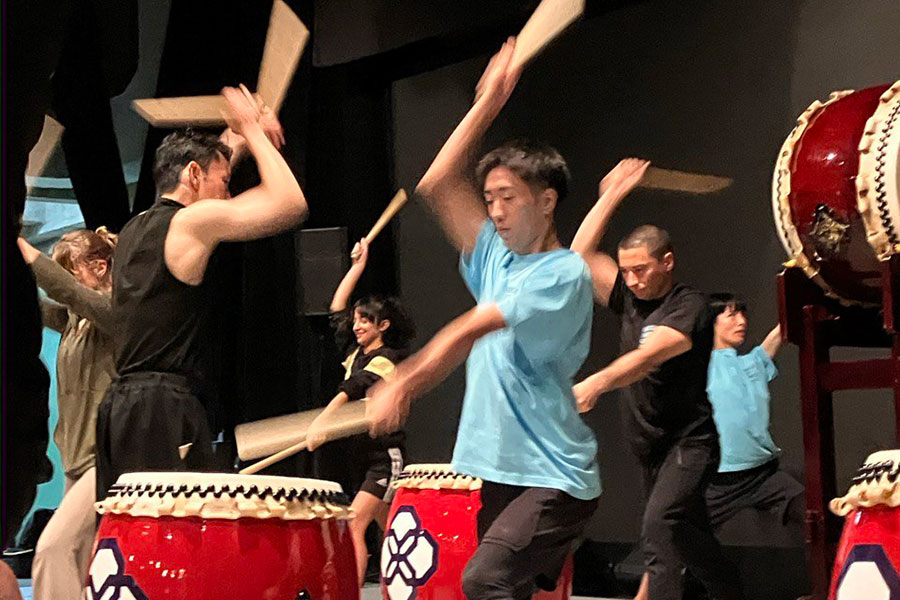
Taiko Drumming Experience
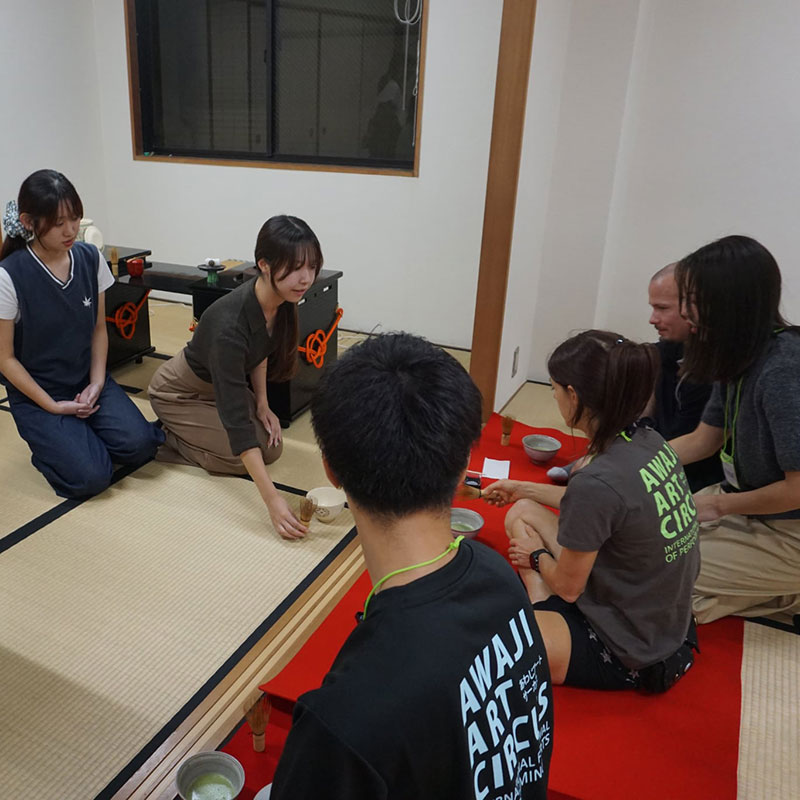
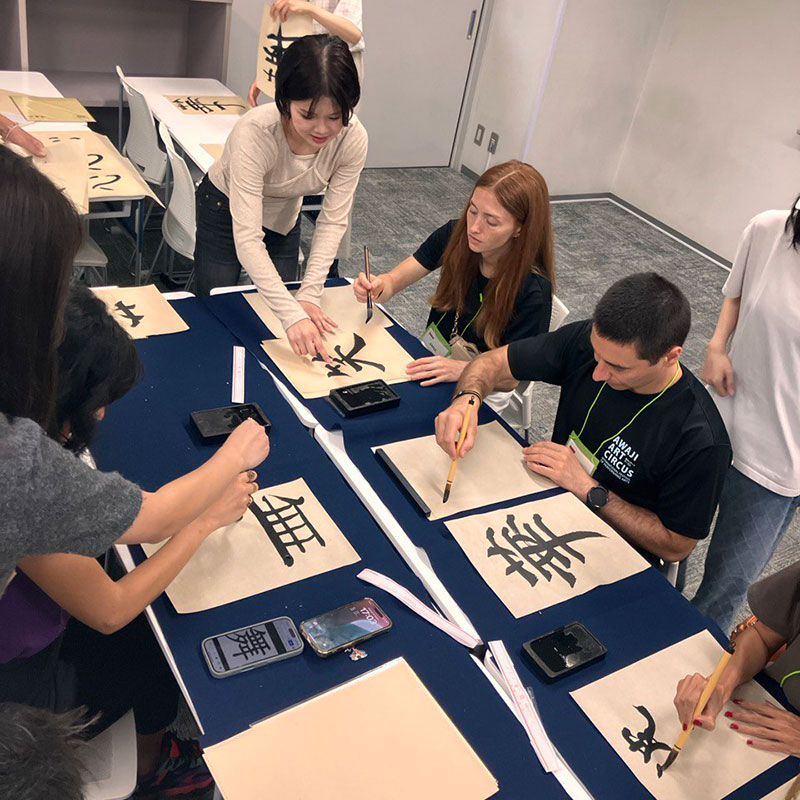
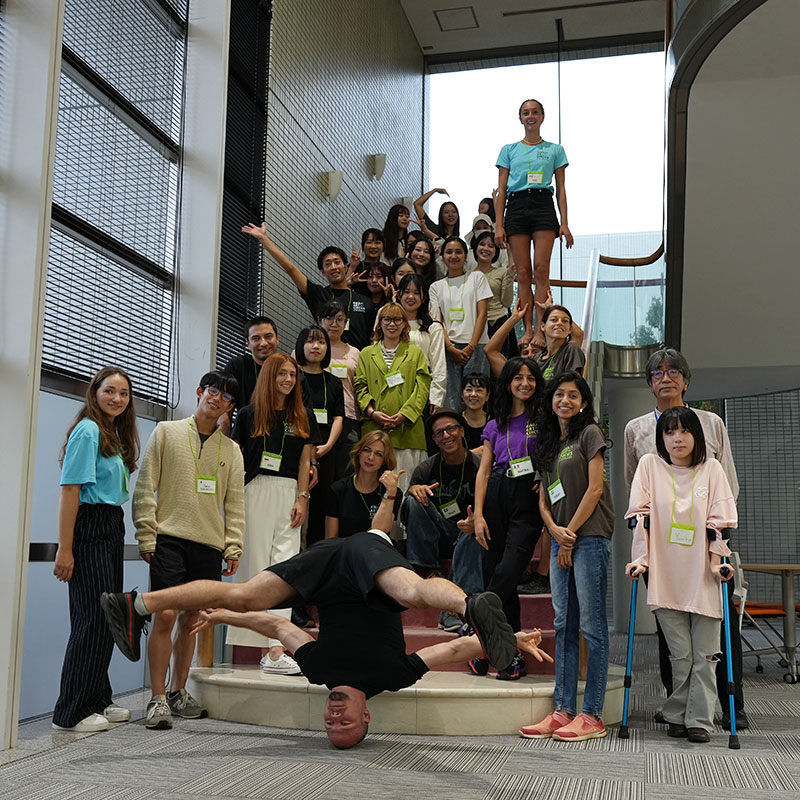
As part of the cultural program, the artists visited Kobe Women’s University, which actively promotes international exchange.
At the beginning of the exchange session, two performers from Awaji Art Circus presented baton twirling and martial arts performances, energizing the venue and exciting the audience. This was followed by a swing dance workshop led by a Swiss dance instructor, in which the artists and students participated together.
After the exchange session, the artists also took part in Japanese cultural experiences such as calligraphy, tea ceremony, and sports wellness fukiya (Japanese blowgun). With the support of the students, the performers tried calligraphy and tea ceremony for the first time, as well as a new sport, thoroughly enjoying each experience.
This visit became a valuable opportunity for the students to deepen international exchange, and for the AAC performers it was a wonderful experience that broadened their understanding of Japanese culture.
Information Sharing by the Artists
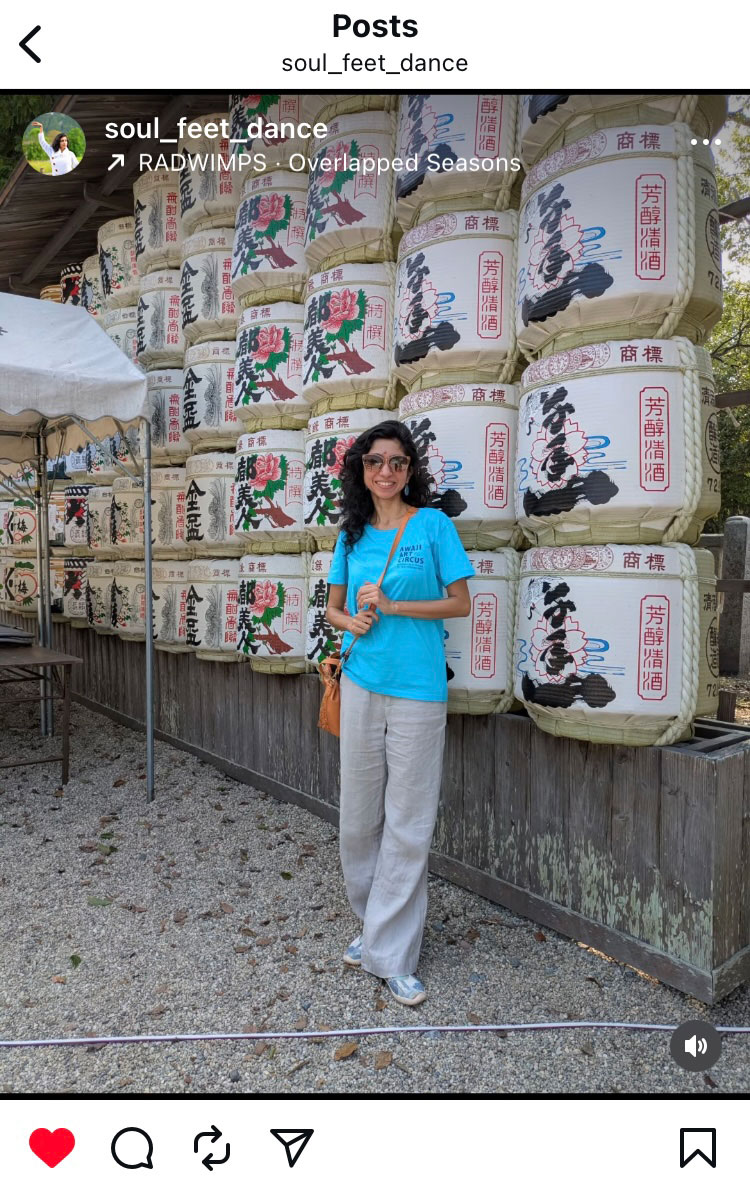
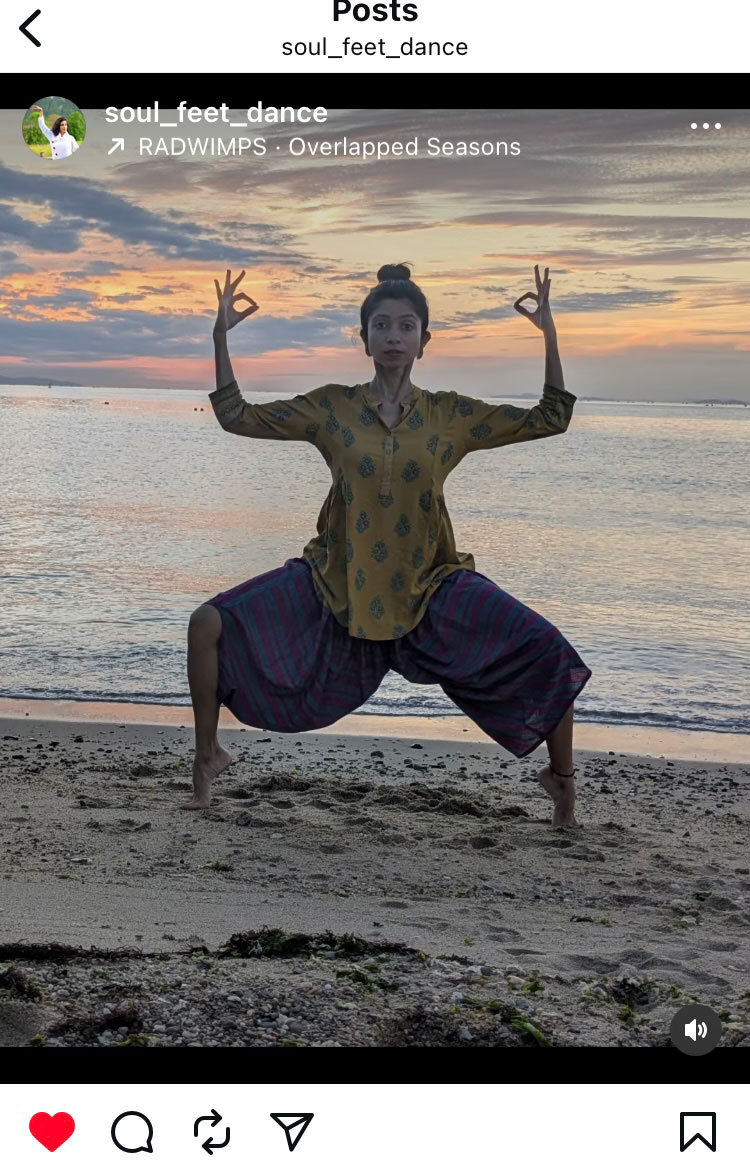
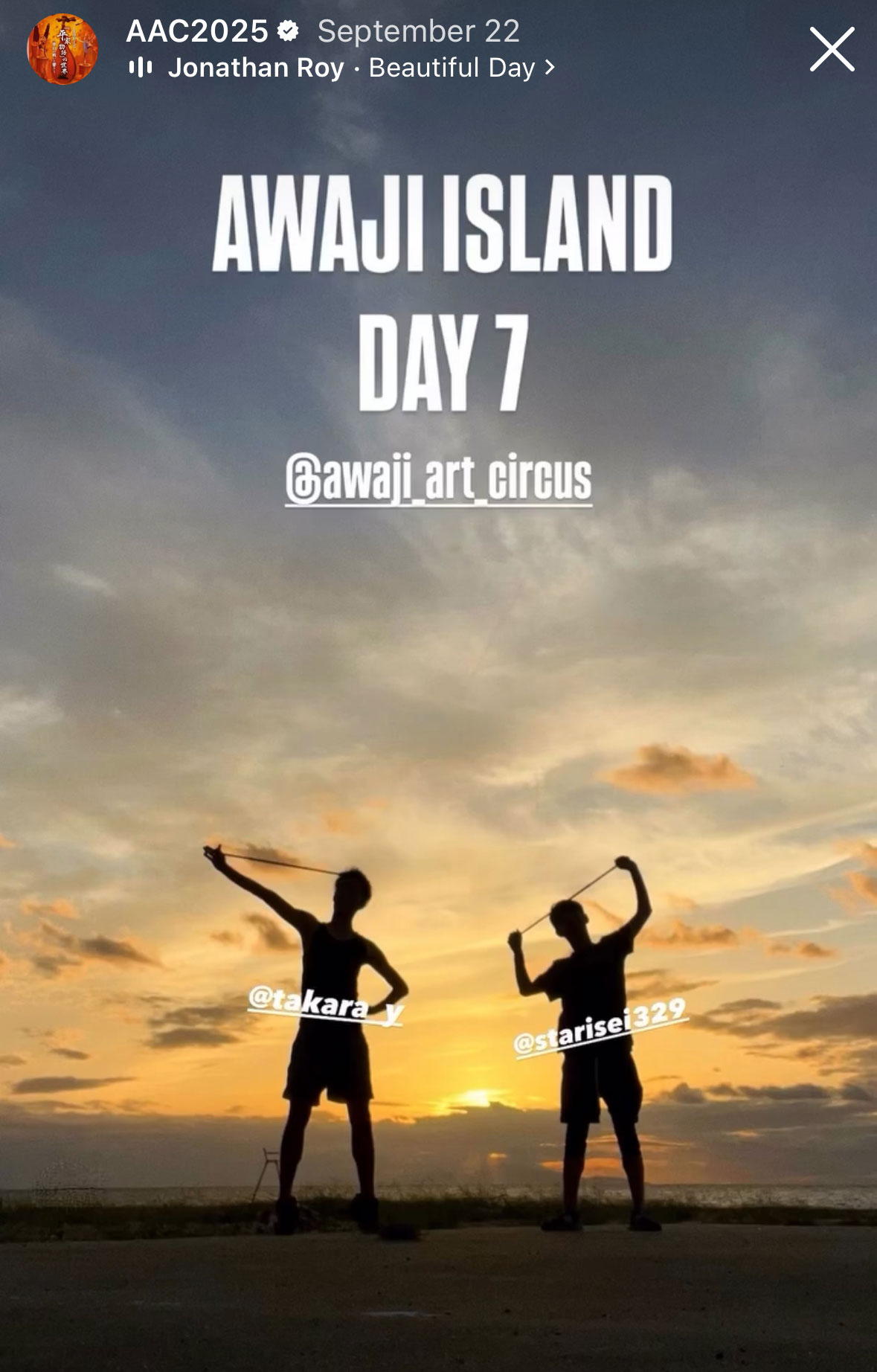
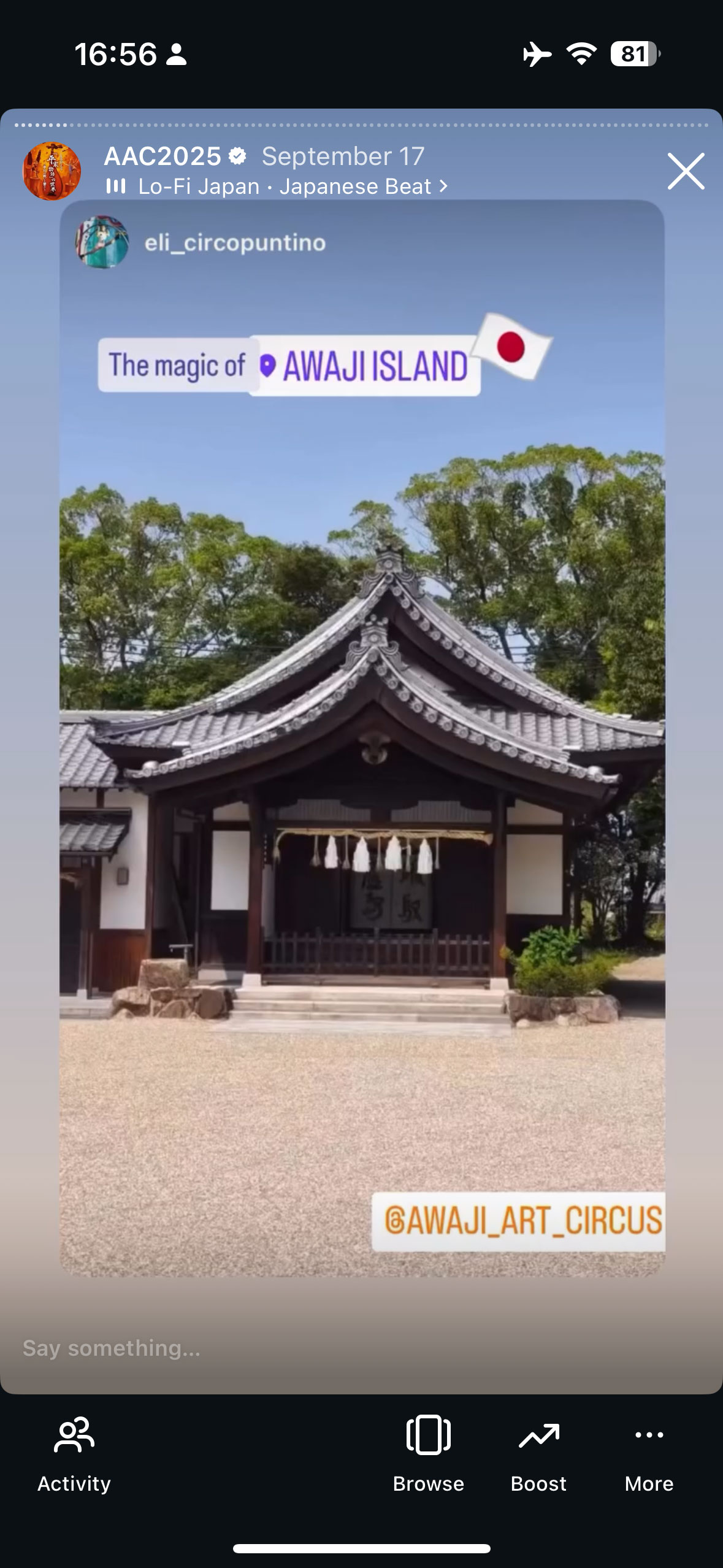
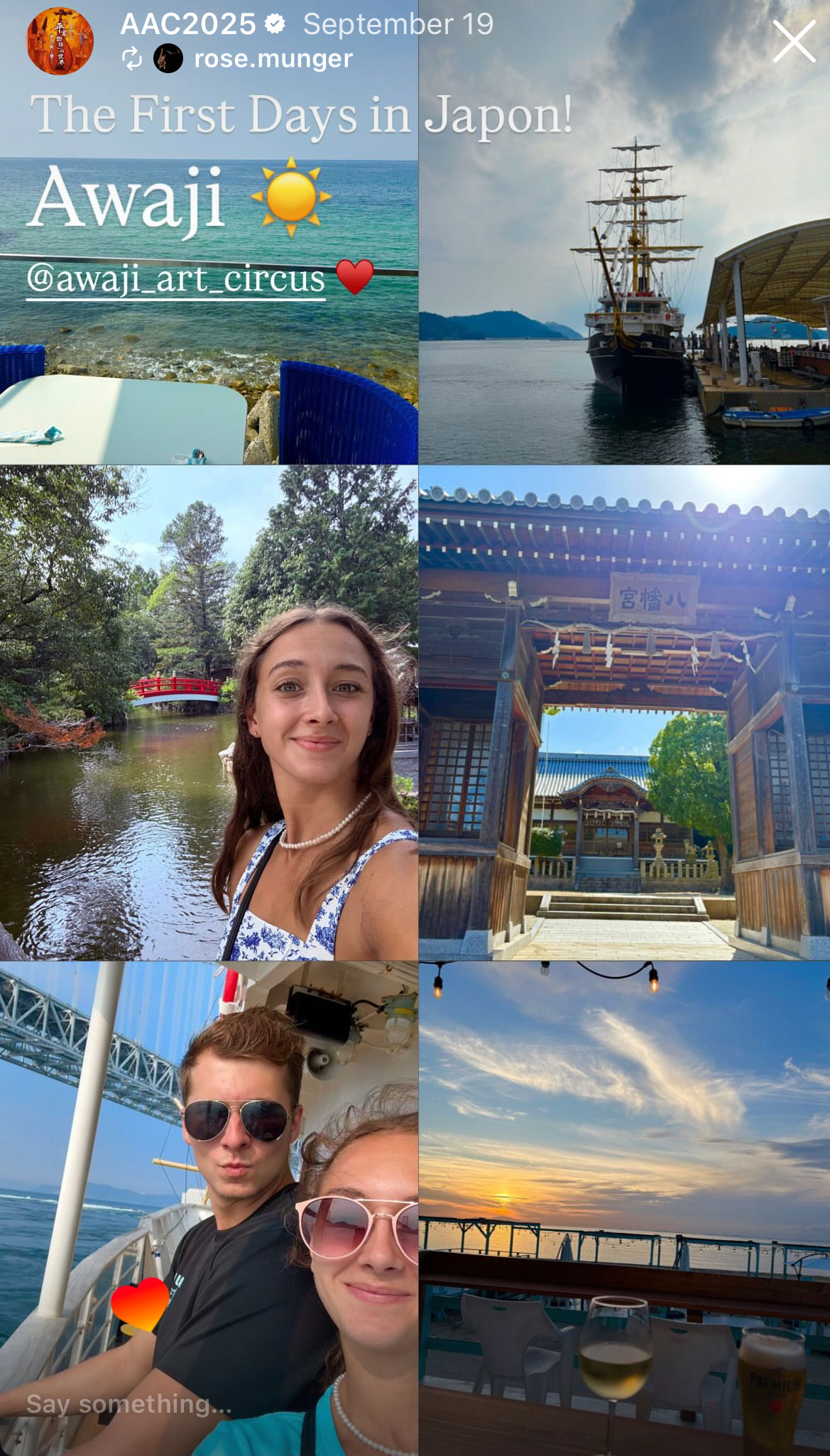
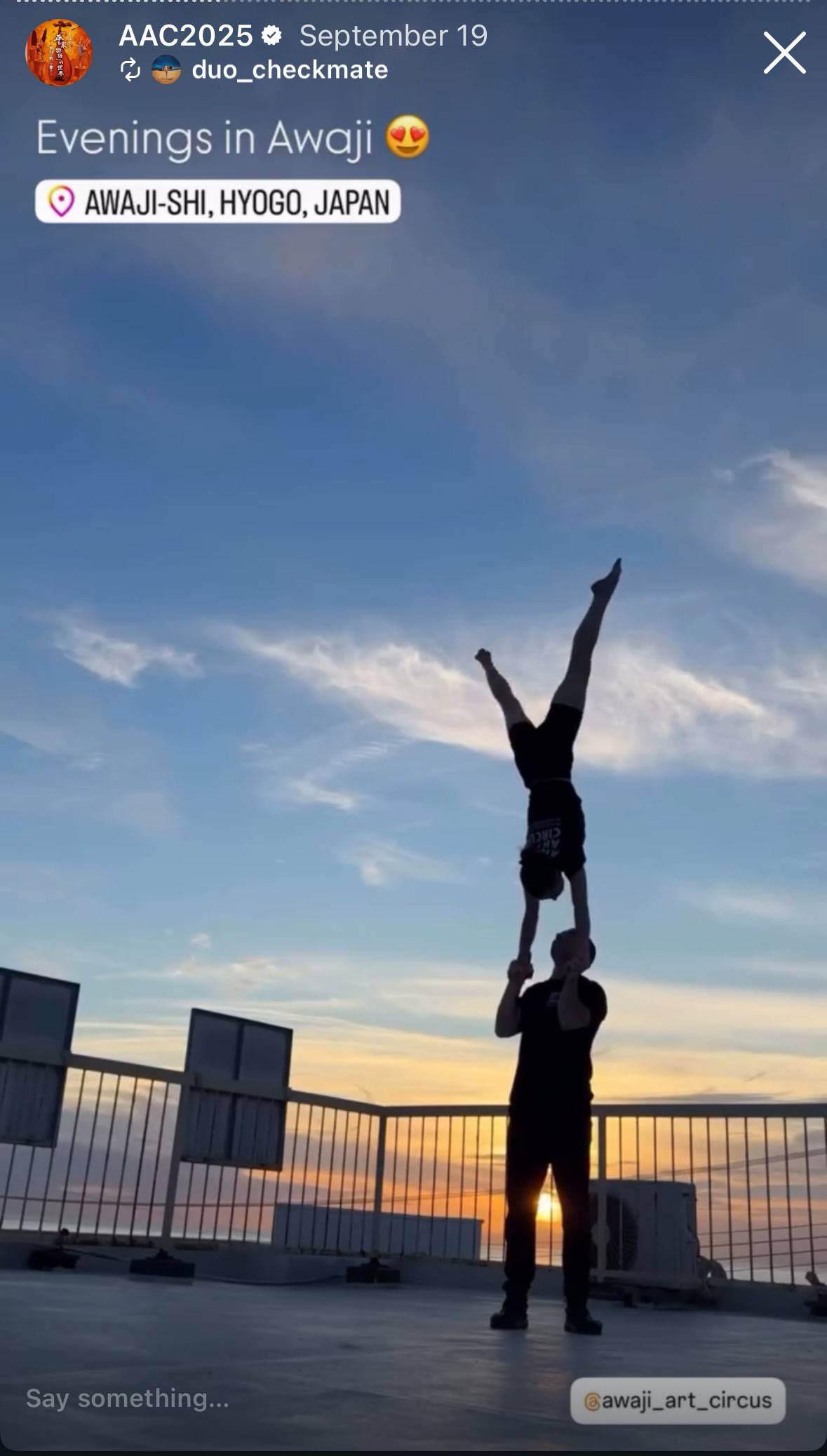
The artists continuously shared their daily experiences and encounters on Awaji Island through social media posts and stories. Beyond showcasing their performances, they also highlighted the island’s landscapes, culture, and interactions with local people. Through this ongoing communication, they authentically conveyed the charm of Awaji Island and the unique world of Awaji Art Circus to followers both in Japan and around the world.

Coverage in Newspapers and Online Media
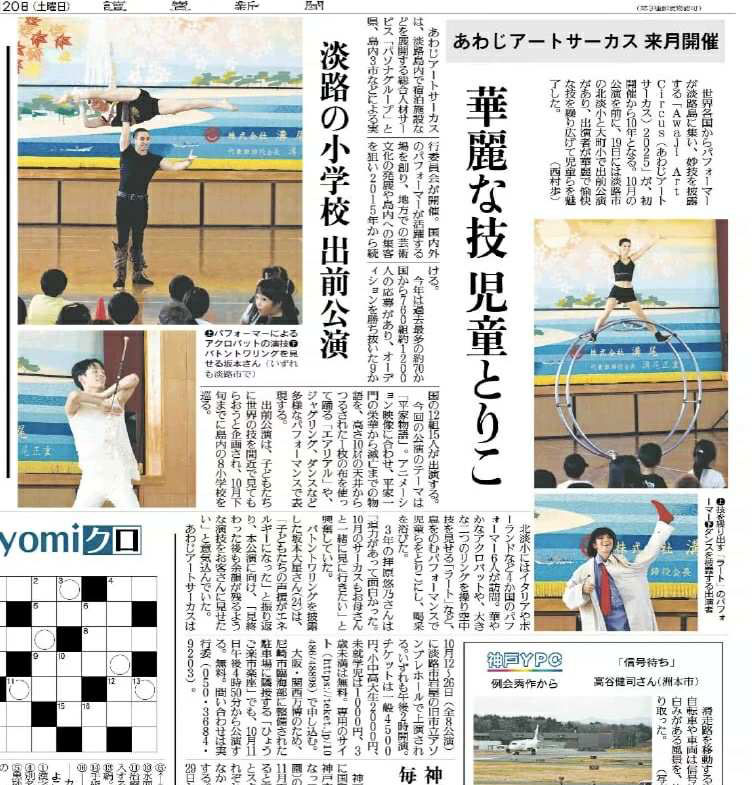
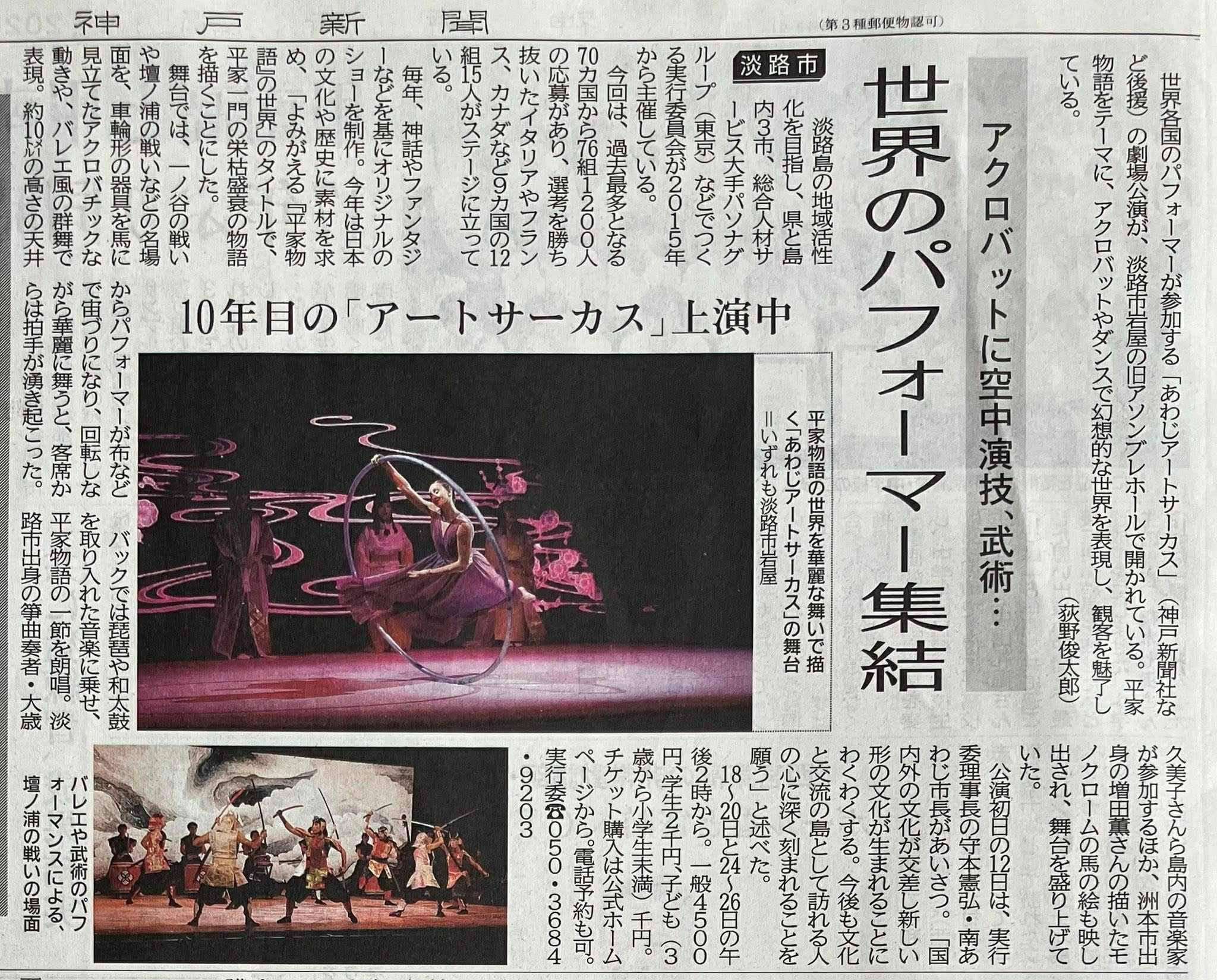
Awaji Art Circus initiatives were featured across a wide range of media, including television, newspapers, magazines, and online platforms.
In print media, the project was covered by The Kobe Shimbun, The Yomiuri Shimbun, and The Sankei Shimbun, which highlighted its international artistic activities set on Awaji Island and its strong connection with the local community.
Online, Awaji Art Circus was introduced on various platforms such as national and international news websites, regional information portals, and culture-focused media. Through this broad media exposure, the activities of Awaji Art Circus and the unique appeal of Awaji Island reached not only audiences in Japan but also readers overseas.

Supported by
Ministry of Foreign Affairs, Japan Tourism Agency, Japan Foundation for International Exchange, Japan National Tourism Organization (JNTO), Awaji City, Awaji City Board of Education, Sumoto City, Sumoto City Board of Education, Minamiawaji City, Minamiawaji City Board of Education, Awaji Island Kuniumi Association, Awaji Island Tourism Association, Kobe Shimbun, Sun Television, Radio Kansai, Kiss FM KOBE
Certified by
Mecenat Association for Corporate Support of the Arts “This is MECENAT 2025“
Sponsored by